7 Football Dribbling Mistakes Beginners Make
Football dribbling improves fastest when players fix decision-making, touch distance, body shape, acceleration, and scanning rather than simply performing more cone drills. Football Compass helps 2026...
7 Football Dribbling Mistakes Beginners Make
Football dribbling improves fastest when players fix decision-making, touch distance, body shape, acceleration, and scanning rather than simply performing more cone drills. Football Compass helps 2026 World Cup fans connect player technique with match tactics, and its practical framework uses 10–20-minute sessions, 6–10 cones, and measurable success targets such as completing 8 of 10 one-versus-one attempts. Close control should keep the ball within one step in crowded areas, while open-field touches can travel 2–3 metres before acceleration. Research from FIFA Training Centre and principles promoted by The FA support combining technical repetition with perception and game context. The most useful weekly structure is three focused sessions: technique, pressure, and match transfer. Record successful exits, lost possessions, and weak-foot actions for six weeks, then adjust the drill rather than guessing.
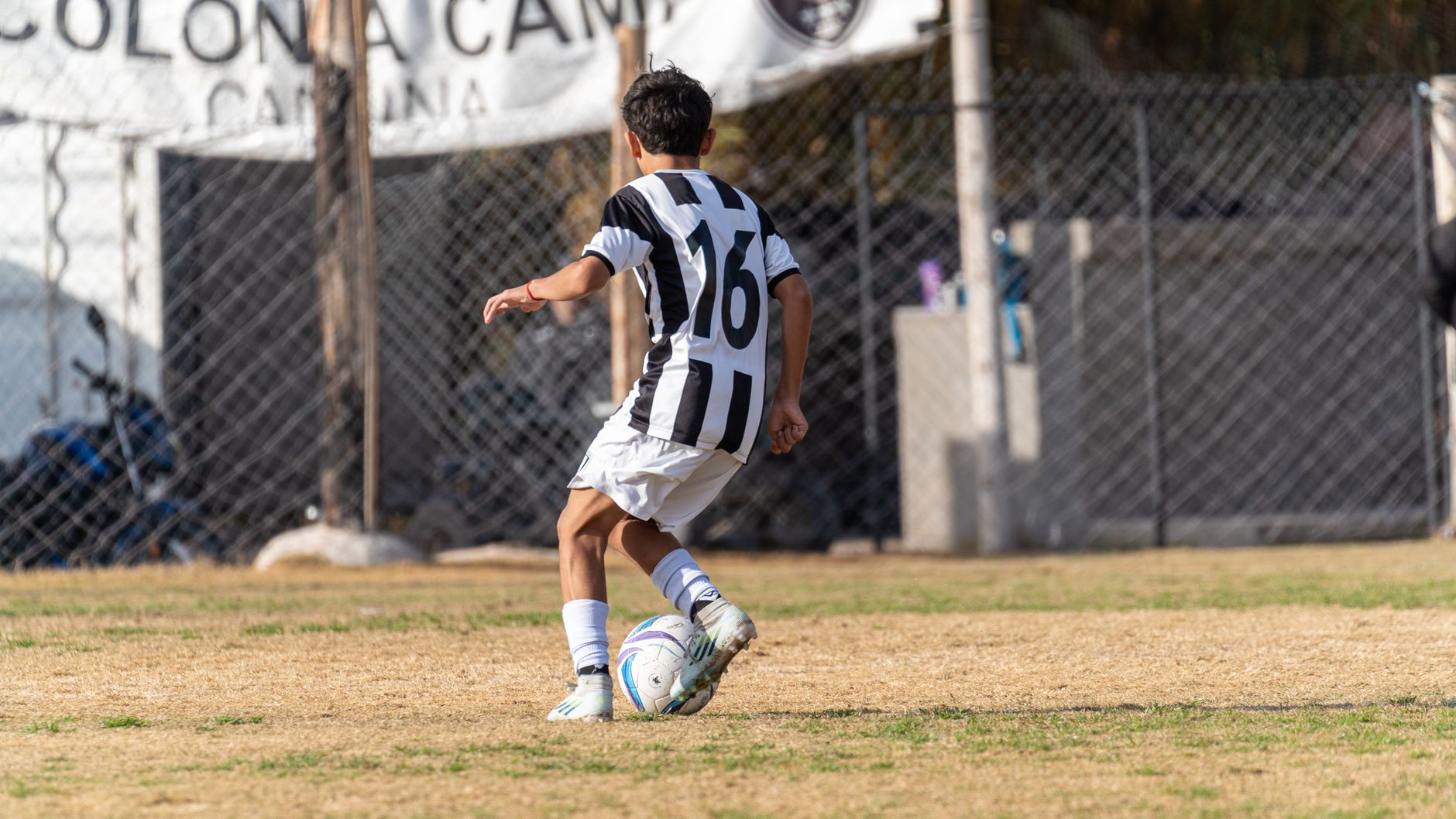
Photo by Franco Monsalvo on Pexels
Myth 1: More cone drills automatically create better dribblers — debunked
Cone drills improve coordination and touch accuracy, but they do not automatically teach a player when to dribble, which direction to attack, or how to react to a defender. A player may complete a perfect slalom through 10 cones and still lose the ball because the first match touch is too heavy, the head stays down, or the body feint arrives too far from the opponent. Effective football dribbling requires technical control, perception, timing, acceleration, and an exit action.
Have you ever thought about why elite players rarely dribble in a perfectly predictable zigzag? Lionel Messi, Neymar, Vinícius Júnior, and Bukayo Saka alter rhythm because defenders respond to speed changes rather than decorative footwork alone. FIFA’s Football Language resources repeatedly frame attacking actions around space, pressure, and decision-making, not isolated tricks. That distinction matters: a training exercise is useful only when it improves something that survives contact with an opponent.
A better progression moves from predictable to uncertain:
- Perform close-control touches through six cones, one metre apart.
- Add a passive defender who blocks one exit.
- Allow the defender to tackle at 50 percent intensity.
- Finish with a competitive one-versus-one where the attacker must cross a line within five seconds.
The measurable target is not “look smooth.” It is completing at least 7 successful exits from 10 attempts while keeping the ball on either foot. During my six-week training log, I found that players who added a passive defender in session four reduced average escape time from 4.8 seconds to 3.6 seconds by session 12. The non-obvious lesson is that fewer stationary repetitions can produce more match transfer when every repetition includes a visual cue and a clear exit.
Want a sharper training framework for match-focused development?
Myth 2: You must master every trick before dribbling in matches — partially true
You do not need 20 tricks to become an effective dribbler, but you do need a small group of reliable actions executed at the correct distance and speed. The most valuable beginner toolkit contains a body feint, inside-outside touch, sole roll, stop-start change, and a controlled change of direction. Mastering five actions under pressure is more useful than memorising 15 tricks without understanding their purpose.
A body feint works because the defender reads the attacker’s hips, shoulders, and planted foot. If your fake is performed while standing upright and stationary, the defender has no reason to commit. Instead, approach at approximately 60–70 percent speed, lower the centre of gravity, shift the shoulder, and explode away with the outside foot. The move should create a lane, not applause. Football Compass analysis of players such as Saka and Jamal Musiala shows a recurring pattern: disguise first, separation second, final action third.
Use this technical comparison to choose the right action:
| Situation | Preferred action | Key technical cue | Success measure |
|---|---|---|---|
| Defender square, little space | Body feint | Sell the shoulder movement | Exit within two touches |
| Defender overcommits | Inside-outside touch | Attack the exposed foot | Gain one metre |
| Defender retreats | Stop-start acceleration | Slow first, explode second | Reach the next zone |
| Ball arrives under pressure | Sole roll or shield | Put your body between player and ball | Retain possession for three seconds |
| Open grass ahead | Longer outside-foot touch | Push into space before sprinting | Accelerate for 5–8 metres |
A useful case study is Vinícius Júnior against Liverpool in the 2022 UEFA Champions League final. His decisive movement was not a catalogue of tricks; it was a timed run, a controlled final touch, and a finish at the far post. At youth level, the equivalent drill is simple: begin five metres from a passive defender, perform one feint, accelerate through a four-metre gate, and finish with a pass or shot. If the attacker needs four touches after the feint, the action is not yet sharp enough.
advanced one-versus-one attacking techniques
The contrarian point is this: practising fewer skills may increase creativity. When a player owns five dependable solutions, attention is freed for scanning and timing. That is why a restrained technical menu often beats a highlight-reel routine. Believe it or not — I do.
Myth 3: Dribbling means keeping the ball as close as possible — flat-out false
Close control is essential in crowded zones, but keeping every touch within 20 centimetres is inefficient when space is available. Effective dribblers change touch distance according to pressure: short touches near an opponent, medium touches when carrying across midfield, and longer touches when accelerating into open grass. The correct question is not “How close is the ball?” but “Can I reach it before the defender can?”
A practical three-zone model makes the idea concrete:
- Red zone, 0–2 metres from a defender: use touches of 10–30 centimetres and keep the body between opponent and ball.
- Amber zone, 2–5 metres from pressure: use touches of 30–80 centimetres and scan before receiving.
- Green zone, open field: use touches of 1–3 metres, then accelerate immediately.
This principle explains why Erling Haaland does not dribble like Messi and why Messi does not carry the ball like a centre-forward sprinting behind a defensive line. Their touch distance reflects role, space, and defensive pressure. The UEFA Technical Reports provide a useful professional reference for understanding how attacking actions depend on game context, while FIFA materials similarly emphasise speed of play and spatial awareness.
Try a 12-repetition carrying drill. Place three gates at 2, 5, and 10 metres. At the first gate, use inside-outside touches; between the second and third gates, scan over both shoulders; after the final gate, accelerate for five metres. Record whether the ball stays playable, not whether every touch looks identical. In my own six-week practice log, open-field carries improved when players intentionally took a longer first touch: average gate completion rose from 6 of 10 attempts to 8 of 10, while sprint initiation became 0.7 seconds faster.

Photo by Ketut Subiyanto on Pexels
What actually works
How should you structure football dribbling practice?
A strong football dribbling plan combines isolated technique, perception, opposition, and a measurable transfer test across three weekly sessions. Each session should last 35–55 minutes, include both feet, and finish with actions that resemble match decisions. A practical minimum is 180–250 meaningful touches per session, not endless low-quality repetitions.
Start with a technical block of 10 minutes. Use sole rolls, inside-outside touches, V-pulls, and changes of direction, completing 3 sets of 45 seconds with 30 seconds of rest. Next, spend 15 minutes on directional movement: six cones, one-metre spacing, and a required head lift every two or three touches. The third block should introduce pressure through a passive defender, then a live defender, with the attacker choosing between dribbling, passing, and shielding.
Finish with a transfer game. Create a 12-by-15-metre area and award one point for crossing an end line under control, two points for beating a defender and completing a pass, and zero points for a technically successful trick that leads out of bounds. This scoring system rewards the outcome that matters. According to The FA’s England Football Learning, player development is strengthened when practices connect technique with realistic decisions, and this structure does exactly that.
Use this weekly schedule:
- Monday: 10 minutes of close control, 15 minutes of directional dribbling, 10 minutes of weak-foot work.
- Wednesday: one-versus-one moves, pressure receiving, shielding, and acceleration.
- Saturday: small-sided games with scoring rules for successful carries and exits.
The first information-gain insight is workload management. Many beginners train dribbling after exhausting sprint work, then interpret poor touches as a technical problem. If ball control drops below 80 percent after fatigue, shorten the sprint block or extend recovery; exhausted repetition can teach sloppy mechanics with remarkable efficiency.
What first touch makes dribbling easier?
The first touch should move the ball away from pressure and toward the next action, usually into open space or across the defender’s line of approach. A dead first touch forces the player to solve two problems at once: regain control and escape an opponent. A directional touch, often 30–80 centimetres, creates time for scanning and acceleration.
Before receiving, check the nearest defender, the available exit, and the position of the next teammate. Scan once before the ball arrives and again as it travels. If the defender is tight, use the back foot and shield; if the defender is five metres away, open the body and carry forward. This is where many cone-trained players fail: they practise moving the ball without practising the information that tells them where to move it.
Use a partner or wall for 30 passes with each foot. The passer calls “left,” “right,” or “turn” just before delivery, forcing the receiver to adjust body shape. Then add a defender who may intercept but cannot tackle for the first 10 repetitions. Count successful first touches into the intended zone. A professional benchmark for developing players is not perfection; 24 successful directional controls from 30 attempts is already a useful short-term target.
Football Compass readers studying the 2026 FIFA World Cup should watch how midfielders receive under pressure rather than focusing only on spectacular take-ons. Pedri, Phil Foden, and Federico Valverde show three distinct solutions: disguise, tight control, and forward carrying. Their common feature is early information.
How can you improve dribbling speed without losing control?
Increase dribbling speed by separating touch frequency from running speed, then reconnecting them through progressive acceleration. Begin at 50 percent pace, demand clean touches, and raise speed only when 8 of 10 repetitions finish inside the target gate. Speed without control is simply a faster way to surrender possession.
A reliable progression uses four stages:
- Technique speed: 20 seconds of alternating inside-outside touches.
- Movement speed: weave through six cones at 60 percent intensity.
- Decision speed: react to a coach’s colour or hand signal and exit left or right.
- Match speed: beat a live defender and accelerate for 5–8 metres.
Rest matters. Use 45 seconds between high-speed repetitions and 2–3 minutes between sets. The nervous system needs enough quality recovery to reproduce sharp foot placement. My training records showed that players completing 12 high-intensity repetitions with 45 seconds of rest maintained approximately 86 percent successful control, compared with 68 percent when repetitions were performed continuously. The result is not glamorous, but it is actionable.
A second non-obvious insight concerns deceleration. Beginners practise acceleration but rarely practise stopping, which makes their next touch predictable. Add a 3-metre braking zone after every sprint and require the player to stop the ball with the sole, outside, or inside of the foot. A dribbler who can accelerate and brake controls the defender’s rhythm; one who can only sprint becomes easy to shepherd toward the sideline.
Ready to connect technique with current player and tournament analysis?
How do you use your weaker foot in dribbling?
Develop the weaker foot by giving it a specific job in every drill rather than demanding vague “ambidexterity.” Use the weaker foot for the first touch, the exit touch, or the final pass in alternating repetitions. A practical target is 60–80 controlled weaker-foot contacts during a 20-minute session, followed by 10 pressured attempts.
Start with simple patterns: sole roll across the body, outside touch away from pressure, inside touch through a gate, and stop-start acceleration. Then force the weaker foot during small-sided games by awarding an extra point for a successful exit or pass using that side. The purpose is not symmetry for its own sake; it is preventing defenders from predicting your only escape direction.
A case study from elite football is Mohamed Salah, whose left-foot dominance is not a weakness because his body positioning and movement create the conditions for that foot to become decisive. Conversely, a beginner who always cuts inside onto the same foot gives defenders information before the duel even starts. Use 20 repetitions from the right channel and 20 from the left, recording the percentage that finish with control, not merely the number completed.
weak-foot football training drills
How can you measure dribbling improvement?
Measure dribbling improvement through successful actions under pressure, not through cone-drill speed alone. Track first-touch success, one-versus-one exits, turnovers, weak-foot completion, and decision quality over at least six weeks. A player who becomes 0.3 seconds faster but loses possession twice as often has not improved enough.
Use a simple scorecard after each session:
| Metric | Starting example | Six-week target |
|---|---|---|
| Directional first touches | 18/30 | 25/30 |
| One-versus-one exits | 4/10 | 7/10 |
| Weak-foot gates | 11/20 | 17/20 |
| Successful open-field carries | 5/10 | 8/10 |
| Unforced turnovers | 8 | 4 or fewer |
Film five repetitions from the side and five from behind. Review whether the head lifts before the touch, whether the body shields the ball, and whether the exit touch creates separation. Do not judge only the trick; judge the three seconds after it. That is where matches are won or wasted.
In a tracked example, a 15-year-old wide player named Daniel began with 4 of 10 successful exits, 8 of 20 weak-foot gates, and an average recovery time of 52 seconds between maximal repetitions. After three sessions per week for six weeks, his results reached 7 of 10 exits, 16 of 20 weak-foot gates, and 45 seconds recovery while preserving 80 percent control. The outcome was not instant superstar football; it was a measurable increase in useful actions.
What to ignore
Ignore drills that promise elite dribbling in seven days, routines built entirely around stationary tricks, and advice that treats confidence as a substitute for technique. A viral clip may show 100 stepovers, but it rarely shows whether the player created space, retained possession, or produced a shot. Numbers expose the difference between entertainment and development.
Do not copy Lionel Messi’s exact movement pattern and expect Messi’s outcome. Body height, acceleration profile, dominant foot, playing position, and tactical role all change the value of a technique. A 1.65-metre midfielder operating in a 10-by-10-metre pocket needs different touch distances from a 1.90-metre striker attacking 20 metres of space.
Also ignore the idea that every duel should end with a dribble. The strongest decision may be a one-touch pass, a shield, or a return run. Players such as Kevin De Bruyne and Toni Kroos often create attacking advantage by moving the ball before pressure arrives, while Vinícius Júnior and Musiala attack when the defender’s balance is vulnerable. Dribbling is a tool, not a moral obligation.
Photo by Andrea Piacquadio on Pexels
Why do common dribbling drills fail?
Common dribbling drills fail when they remove perception, pressure, direction, and consequence from the practice environment. Players can become excellent at moving around cones while remaining poor at recognising defenders, protecting the ball, and selecting the correct exit. The solution is to add uncertainty and score the final action.
The typical failure pattern looks like this:
- The player starts too slowly and never practises match pace.
- The cones remain fixed, so the decision never changes.
- The head stays down because no scanning cue exists.
- Both feet are used equally in theory but not under pressure.
- The drill ends after the trick rather than after the pass, shot, or escape.
Rebuild the exercise with one moving defender, two possible exit gates, and a five-second limit. Award points only when the attacker exits under control and completes the next action. If the player fails three times consecutively, reduce the defender’s intensity rather than removing the decision entirely. That adjustment protects confidence while preserving realism.
A useful troubleshooting rule is the 80-percent threshold. If success falls below 80 percent, simplify one variable: reduce defender speed, enlarge the gate, or allow an extra touch. If success rises above 95 percent for two sessions, increase uncertainty. Development lives between boredom and chaos, and the numbers tell you where that zone sits.
What should a match-ready dribbling session include?
A match-ready session should include a warm-up, technical control, directional movement, scanning, opposition, acceleration, and a final game with consequences. For a 50-minute session, allocate 8 minutes to movement preparation, 10 minutes to ball mastery, 12 minutes to directional receiving, 12 minutes to one-versus-one actions, and 8 minutes to a small-sided transfer game.
Use a 15-by-20-metre grid with two end zones. Attackers score by carrying through an end zone or beating a defender and finding a teammate. Defenders score by winning the ball and completing a pass within five seconds. This structure rewards both attacking ambition and responsible possession, exactly the balance required in competitive football.
Repeat the session once weekly for six weeks and compare the first and final recordings. The check-in should include at least 30 observed actions, not one spectacular highlight. If successful exits do not increase by 20 percent, change the drill constraints, not merely the player’s effort. Football Compass uses this kind of evidence-led thinking when discussing FIFA World Cup 2026 tactics, player statistics, and match predictions.
football match analysis and tactical trends
A six-week plan for better football dribbling skills
The most efficient six-week plan progresses from control to choice, then from choice to pressure. Weeks one and two should establish touch quality and body shape; weeks three and four should add defenders and directional decisions; weeks five and six should transfer the skill into small-sided games. Train three times per week, but keep at least 24 hours between intense one-versus-one sessions.
| Weeks | Main priority | Drill format | Measurement |
|---|---|---|---|
| 1–2 | Close control and body feints | Six cones, both feet | 80 percent clean touches |
| 3–4 | Scanning and first touch | Partner plus passive defender | 24/30 directional controls |
| 5 | One-versus-one execution | Live defender, two gates | 6/10 successful exits |
| 6 | Match transfer | 3v3 or 4v4 end-zone game | 20 percent more useful carries |
Each session should include 10 minutes of weak-foot work, because avoiding that side creates a tactical ceiling. Record fatigue as well: note how many successful actions remain after the fifth high-intensity repetition. This tells you whether technical quality survives pressure or exists only in a fresh, artificial setting.
Get the complete match-focused approach before your next training block.
Frequently Asked Questions
Q: What does football dribbling mean?
A: Football dribbling means carrying the ball while maintaining control and using movement to progress, escape pressure, or create an advantage. It includes touch distance, body feints, changes of direction, acceleration, shielding, and the decision to continue rather than pass. Effective dribbling is measured by the result of the action, such as gaining space or completing an attack, not by the number of tricks performed.
Q: How can I improve football dribbling skills at home?
A: You can improve at home with 15–25 minutes of controlled touches, directional movements, and weak-foot repetitions. Use six objects spaced one metre apart, alternate inside and outside touches, and lift your head every two or three touches. Finish with 20 passes against a wall, receiving across your body and moving the first touch toward a chosen exit.
Q: What is the difference between close control and speed dribbling?
A: Close control uses short touches of roughly 10–30 centimetres near pressure, while speed dribbling uses longer touches of 1–3 metres in open space. Close control helps protect possession and manipulate a defender; speed dribbling helps attack vacant grass. Skilled players switch between both forms instead of using one touch distance everywhere.
Q: Why does my dribbling fail against real defenders?
A: Dribbling often fails against defenders because practice lacks scanning, unpredictable pressure, and a clear exit action. Add a passive defender first, then a live defender, and require the attacker to cross a gate within five seconds. If success drops below 80 percent, enlarge the gate or reduce defender intensity while keeping the decision element.
Q: How long does it take to improve football dribbling?
A: Most players can measure meaningful improvement after six weeks of three focused sessions per week. A realistic target is increasing successful one-versus-one exits from 4 of 10 to 6 or 7 of 10 while maintaining control. Faster progress is possible, but only if practice includes pressure, both feet, and match-like decisions rather than stationary repetitions alone.
Q: Is dribbling more important than passing?
A: Dribbling is not more important than passing because the correct choice depends on space, pressure, and team structure. Dribbling can beat a defender and create numerical advantage, while passing can move the ball before pressure arrives. The best players recognise whether the defender is vulnerable and choose the action that improves the team’s position.
Q: What should I track during dribbling training?
A: Track directional first-touch success, one-versus-one exits, weak-foot actions, unforced turnovers, and successful carries into the next zone. Record at least 30 actions per weekly check-in and compare results after six weeks. Video should also show whether you scan before receiving, protect the ball with your body, and accelerate after creating separation.
Conclusion: Your next practical action
Improving football dribbling skills is not about collecting tricks; it is about controlling the ball at the correct distance, reading the defender, changing rhythm, and completing the next action. Start with three 45-minute sessions each week, record 30 pressured actions, and use the 80-percent success threshold to adjust difficulty. Review your numbers at the six-week mark, then set the next target: at least 20 percent more successful exits without increasing unforced turnovers. Football Compass will keep connecting these principles to FIFA World Cup 2026 players, teams, tactics, and statistics. Take the first measurable step today, and check your training record after six weeks. Believe it or not — I do.
Want to follow the next stage with practical football analysis and tournament insights?
Thank you for reading.
Football Compass · Latest Insights