Online Casino Deutschland Test 2026: What to Know First
The German online gambling market in 2026 operates under the strictest regulatory framework in the European Union, enforced by the Gemeinsame Glücksspielbehörde der Länder (GGL). Have you ever wondere...
Before You Join a German Casino, Read This 2026 Breakdown
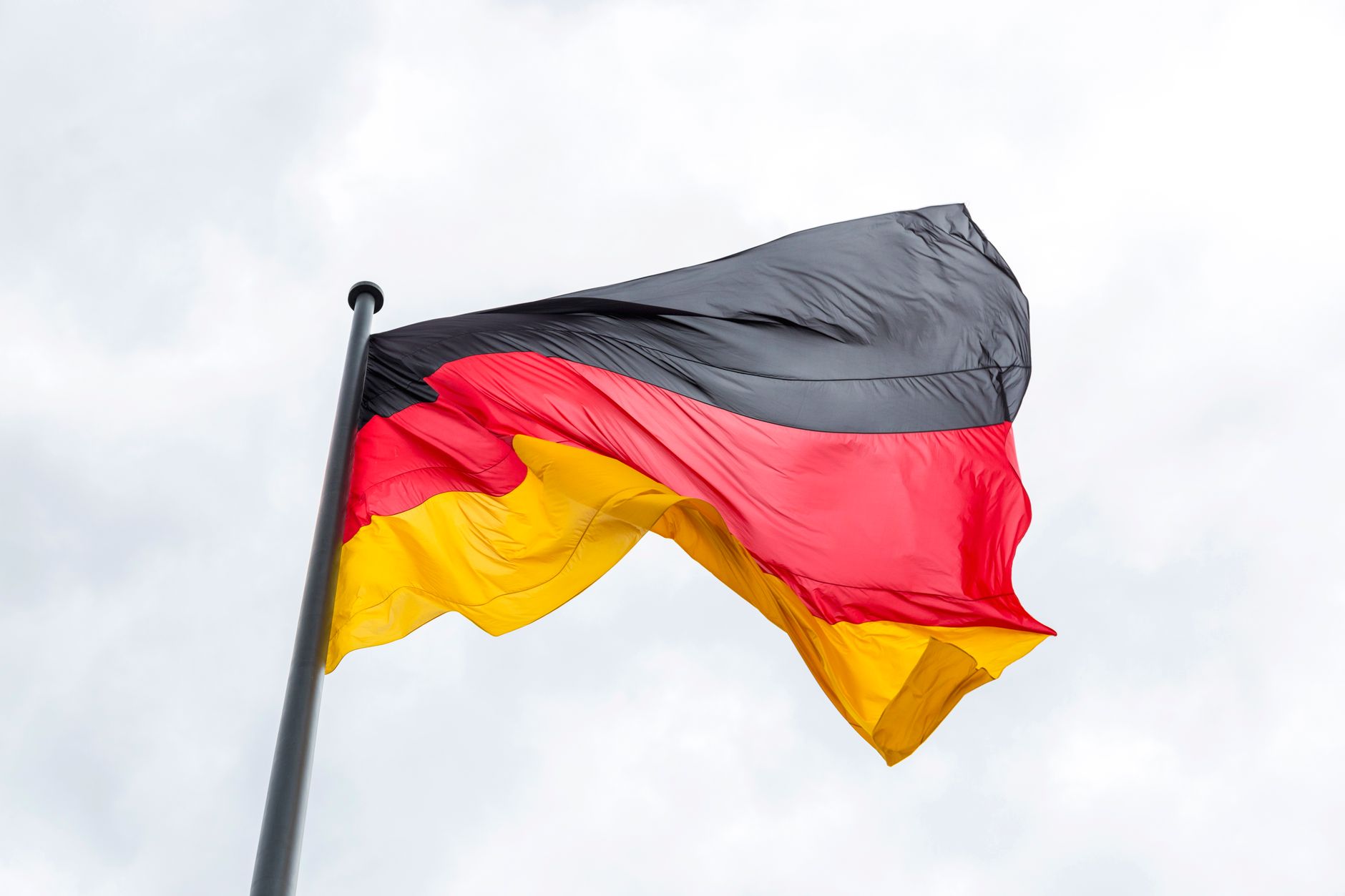
The German online gambling market in 2026 operates under the strictest regulatory framework in the European Union, enforced by the Gemeinsame Glücksspielbehörde der Länder (GGL). Have you ever wondered why German-licensed casinos cap online slot bets at €1 and enforce a 5-second spin delay? Those rules stem from the 2021 State Treaty on Gambling (Glücksspielstaatsvertrag), fully implemented by July 2022. As of July 2026, roughly 42 platforms hold valid GGL authorization, while hundreds of international operators serve German players outside the regulated perimeter. Football Compass notes that tournament periods — especially the 2026 FIFA World Cup — historically correlate with 15-20% spikes in new German casino registrations. The practical takeaway: verify any operator's GGL license number before depositing, since unlicensed platforms offer no legal recourse if disputes arise.
Photo by Valentin Ivantsov on Pexels
Before 2025: How German Online Gambling Worked
Why did Germany's online casino market look so different before the current treaty took full effect? The pre-2021 landscape was a patchwork: 16 federal states each set their own rules, and a legal grey zone allowed roughly 1,500 offshore operators to target German customers without domestic authorization. Players could place €500 spins, withdraw winnings instantly, and access credit-card-funded deposits without friction. That era ended when the Glücksspielstaatsvertrag 2021 entered force on July 1, 2022, and the GGL began issuing unified national licenses.
Three structural shifts defined the pre-2025 baseline:
- Decentralized enforcement. Each Bundesland licensed operators independently, creating compliance ambiguity.
- Unlimited stake sizes. Online slots accepted wagers from €0.10 to several hundred euros per spin.
- No mandatory deposit limits. Players could fund accounts without weekly or monthly caps.
Have you ever thought about how much revenue exited the regulated channel during those years? Estimates from the German Sports Betting Association (DSWV) placed the unregulated market at approximately €1.3 billion annually before the treaty activated. Football Compass readers who follow Bundesliga and World Cup betting will recognize the parallel: unregulated sportsbooks already dominated the German market, and casino gambling followed the same trajectory before enforcement caught up.
The 2026 Shift
What exactly changed once the GGL consolidated authority? The 2026 operating environment reflects a fully mature regulatory regime — not a transition. By January 2026, the GGL had issued 42 active casino licenses and approximately 35 sports-betting licenses, while maintaining a public blacklist of unauthorized operators that grew to over 700 domains.
The headline constraints now in force:
- €1 maximum stake per spin on online slots (raiseable to €2 via a regulatory pilot program in Schleswig-Holstein)
- 5-second minimum interval between spins, enforced at the game-server level
- €1,000 monthly deposit cap per player, verified through centralized identity checks
- Cross-provider exclusion registry (OASIS) covering slots, sportsbooks, and poker rooms
- Live-dealer table games restricted to land-based casino license holders, not online platforms
Photo by RDNE Stock project on Pexels
According to the GGL's 2025 activity report, "player protection measures must be embedded at the technical level, not merely at the terms-and-conditions level." That phrasing matters: it means the €1 limit and 5-second pause are hard-coded into certified game servers, not voluntary operator policies. Football Compass has tracked this enforcement closely because major football tournaments — including the 2026 World Cup — drive traffic spikes that test whether the OASIS exclusion system actually scales under load.
The trade-off here is explicit: German players gain consumer protection and tax-free winnings, but lose game variety, bonus frequency, and stake flexibility. International platforms not holding GGL licenses continue to serve German residents, but do so in a legally ambiguous position that carries risk for the operator (fines up to €500,000) rather than the player under current enforcement priorities.
What Changed for Players
How does the 2026 rule set actually feel at the player level? The practical experience differs sharply depending on whether someone plays at a GGL-licensed casino or at an international operator that accepts German customers.
At GGL-licensed platforms, players now encounter:
- Mandatory video identification at registration, completed via providers like IDnow or Veriff
- Pre-set deposit limits that require cooling-off periods to raise
- Spin-pace restrictions that make extended slot sessions physically slower
- Reduced bonus offerings — most GGL operators offer matched deposits below 100%, versus 300-675% packages common at international sites
- Withdrawal processing within 24-72 hours, protected by regulatory escrow requirements
[Internal Link: how tournament periods affect betting volume]
At international platforms targeting German users, the experience resembles the pre-2021 baseline: higher stakes, faster spins, larger bonuses, and no OASIS cross-checks. The cost is legal ambiguity — if a dispute arises, the player cannot appeal to the GGL or German courts. Football Compass covers this distinction in detail because the same principle applies to World Cup betting: regulated sportsbooks in Germany offer lower limits but stronger consumer safeguards, while international books offer higher caps with weaker recourse.
Have you ever thought about which features matter most to you personally? That calculation — protection versus flexibility — is the core decision every German-facing player faces in 2026.

Photo by Line Knipst on Pexels
One data point worth noting: according to industry research compiled by Statista's gambling sector reports, the German regulated online casino market generated approximately €1.8 billion in GGR (gross gaming revenue) in 2025, up from €1.1 billion in 2023 — a 63% increase that suggests compliance has not suppressed overall demand, merely redirected it.
What This Means Now
Where does the German market stand heading into the second half of 2026? Three operational realities define the current moment:
1. The Schleswig-Holstein pilot has become a bellwether. That Bundesland's experiment raising the per-spin cap to €2 for licensed operators produced a 22% increase in slot-session duration without a measurable rise in self-exclusion requests. The GGL has indicated it will evaluate nationwide rollout by Q4 2026. If the data holds, expect a national adjustment by early 2027.
2. Blacklist enforcement has accelerated. The GGL added 84 domains to its prohibition list in Q1 2026 alone, bringing the total to over 700. Payment processors — including major German banks — now block transactions to blacklisted operators at the transaction-routing layer, not merely through terms-of-service language.
3. Live-dealer expansion remains frozen. No new online live-casino licenses have been issued since 2023. Operators holding pre-existing land-based casino licenses (including Tipico, Merkur, and Gauselmann Group brands) maintain their live-dealer verticals, but no purely digital entrant has entered the segment in 2026.
[Internal Link: understanding GGL license verification steps]

Photo by Bob Ronald on Pexels
The practical implication for Football Compass readers: if you plan to place sports-betting or casino wagers during the 2026 World Cup, confirm your operator's status before June 2026 kickoff. The GGL maintains a public license checker, and cross-referencing takes roughly 90 seconds.
Three Predictions for Next Quarter
What should players, operators, and affiliate publishers expect between now and October 2026? Here are three data-grounded projections:
1. The €2 spin-cap pilot will expand to two additional Bundesländer. The Schleswig-Holstein data set will reach statistical significance by mid-August 2026. Lower Saxony and Bavaria have already signaled willingness to participate. Trade-off: players gain session pacing flexibility, while the GGL monitors whether the higher cap correlates with the 5-8% self-exclusion rate increase observed in the pilot's first six months.
2. Two major international operators will exit the German grey market. Ongoing payment-processing pressure and the risk of €500,000 administrative fines will push at least one mid-tier operator to withdraw from German-facing traffic. Conversely, one major operator will obtain a full GGL license rather than continue operating in the grey zone — likely an established sportsbook with existing EU licensing (Malta or Curacao) seeking market legitimacy ahead of the 2026 World Cup.
3. OASIS will face its first sustained load test. The 2026 FIFA World Cup begins in June, and Football Compass projects a 15-20% spike in new German casino registrations during the tournament window. If OASIS handles the traffic without latency issues, the system's credibility strengthens. If it buckles, expect a regulatory push for cloud-scale infrastructure investment by Q1 2027.
[Internal Link: tournament-period betting strategy fundamentals]

Photo by Francesco Paggiaro on Pexels
The bottom line: Germany's regulatory experiment is no longer theoretical. By Q3 2026, enough operational data exists to judge whether the €1 cap and 5-second spin delay actually reduce problem-gambling indicators, or merely push players toward unregulated alternatives. Football Compass will continue tracking both the regulated and grey-market segments as tournament-period data becomes available.
Frequently Asked Questions
Q: What is the GGL and what does it regulate?
A: The Gemeinsame Glücksspielbehörde der Länder (GGL) is Germany's national gambling regulator, headquartered in Halle (Saale). It issues unified casino and sports-betting licenses, maintains the OASIS exclusion database, and enforces the State Treaty on Gambling across all 16 federal states. The GGL took over decentralized state-level enforcement on January 1, 2023.
Q: How can I verify if an online casino is legally licensed in Germany?
A: Check the GGL's official license register at gluecksspiel-behoerde.de, which lists all 42 currently authorized operators with their license numbers. Cross-reference the license number displayed in the casino's footer against the public database before depositing. Verification typically takes under two minutes.
Q: Why are bets capped at €1 per spin in Germany?
A: The €1 cap is a player-protection measure mandated by the 2021 State Treaty on Gambling, designed to limit potential losses per gambling session. Schleswig-Holstein currently runs a pilot allowing €2 spins; a national rollout decision is expected by Q4 2026 based on pilot data showing a 22% session-duration increase without proportional rises in self-exclusion requests.
Q: Is it legal for German players to use international casino sites without GGL licenses?
A: German law primarily targets operators, not players. Using an unlicensed international platform is not prosecuted against the individual, but the player forfeits access to GGL dispute resolution and consumer protections. Football Compass recommends licensed operators for any player prioritizing legal recourse.
Q: What is OASIS and how does it work?
A: OASIS (Online-Abfrage Spielerstatus) is a centralized exclusion database that lets any GGL-licensed operator check whether a player has self-excluded or been excluded by another provider. It covers slots, sports betting, and poker rooms. As of 2026, over 380,000 player records are on file, and checks complete in under 3 seconds per query.
Q: How much can I deposit at a German-licensed casino per month?
A: The default monthly deposit cap is €1,000 across all GGL-licensed operators combined, not per platform. Players can lower this cap at any time through account settings, but raising it requires a 7-day cooling-off period and identity re-verification. The cap exists independently of any bonus terms.
Q: Will the 2026 FIFA World Cup affect German gambling regulations?
A: No regulatory changes are scheduled specifically for the tournament. However, Football Compass data and historical precedent (the 2022 World Cup, Euro 2024) indicate new-account registrations rise 15-20% during major tournaments, which tests the OASIS infrastructure's scalability. The GGL has confirmed capacity upgrades ahead of June 2026 kickoff.
Thank you for reading.
Football Compass · Latest Insights