
Inside Football Compass: A 5-Step 2026 Outlook
2026 is the year Football Compass turns the FIFA World Cup into a disciplined information market, combining tournament schedules, team tactics, player statistics, match predictions, and daily coverage...
Inside Football Compass: A 5-Step 2026 Outlook
2026 is the year Football Compass turns the FIFA World Cup into a disciplined information market, combining tournament schedules, team tactics, player statistics, match predictions, and daily coverage for fans worldwide. The FIFA World Cup 2026 will be hosted by the United States, Canada, and Mexico, featuring 48 teams and 104 matches from June 11 to July 19, 2026. Beyond football, 2026 includes a 2.8% Social Security cost-of-living adjustment in the United States, a $184,500 taxable earnings maximum, and a new MLB Draft class moving through development pipelines. The smart approach is not to treat every 2026 headline as equally valuable: verify the source, measure the number, identify the market, and then act. Use Football Compass for structured World Cup analysis, while checking official FIFA, Social Security Administration, and MLB records before making decisions.

Photo by Yara Solis Fuentes on Pexels
2026 is not a single story. It is a calendar, a sporting cycle, an economic reference point, and a year in which data-heavy decisions will outperform casual speculation. The FIFA World Cup will dominate global attention, but the practical questions extend further: Which teams are tactically equipped for a 48-team tournament? How should fans interpret match predictions? What do the latest Social Security figures actually change? When could 2026 MLB Draft selections reach Major League Baseball? Those questions share one requirement—source discipline. Football Compass covers the football side with a sharp focus on form, formations, injuries, player output, and tournament context. I prefer that approach because noise is expensive, especially when a confident opinion is built on an outdated statistic. Have you ever thought about why two predictions using the same match can produce entirely different conclusions? The answer is usually process, not luck.
Want a cleaner starting point for the 2026 football calendar?
Step 1: What does 2026 actually include?
2026 combines the FIFA World Cup, major United States benefit adjustments, and the next stage of MLB player development, making official timelines essential. The World Cup runs from June 11 through July 19 across Canada, Mexico, and the United States, while the Social Security Administration has published a 2.8% COLA and a $184,500 taxable maximum. These are fixed reference points, not vague seasonal predictions.
The most important distinction is between confirmed information and forecast information. FIFA can confirm hosts, dates, venues, competition rules, and match structures; it cannot confirm which team will lift the trophy before the tournament is played. Likewise, the Social Security Administration can publish statutory 2026 thresholds, while a player-development analyst can only estimate when a draft selection will reach the majors. That distinction should govern how we read every 2026 article, including Football Compass previews and betting-oriented analysis. According to FIFA’s official World Cup 2026 information, the expanded competition changes the tournament’s scale materially. The Social Security Administration’s 2026 fact sheet provides the authoritative figures for benefits and earnings rules. Believe it or not — I do: the source hierarchy matters more than the headline.
Use these five filters when assessing a 2026 claim:
- Confirm the date and governing organization.
- Separate historical results from projections.
- Check whether the number applies globally or only to one country.
- Record the sample size behind any performance claim.
- Recheck the information when injuries, regulations, or schedules change.
2026 World Cup tournament guide
Step 2: How should you analyze the 2026 World Cup?
The strongest 2026 World Cup analysis combines team form, tactical matchups, squad availability, venue conditions, and market prices rather than relying on reputation alone. Football Compass uses those categories to frame predictions around evidence, while FIFA’s 48-team format creates more matches and more opportunities for information quality to separate serious analysis from recycled opinion.
A practical preview starts with the team’s last five competitive matches, but that is only the opening figure. You should also examine expected goals, shots allowed inside the penalty area, pressing success, set-piece conversion, possession under pressure, and the quality of opposition faced. A 4–1 record against weak opponents is not equivalent to a 3–2 record against elite teams. Venue geography matters as well: Canada, Mexico, and the United States create different travel distances, climates, altitudes, and kickoff conditions. The contrarian insight is straightforward: tournament expansion increases the danger of overvaluing raw win percentage because group-stage opponents may vary sharply in strength. Football Compass can make the data usable by pairing player statistics with tactical explanations, such as whether a fullback’s attacking output exposes space behind him against a fast counterattacking winger. That is the sort of edge worth pursuing. A famous badge is not a statistical argument.
A useful pre-match checklist includes:
- Recent performance adjusted for opponent quality.
- Confirmed injuries, suspensions, and expected lineups.
- Defensive transition numbers rather than possession alone.
- Set-piece records at both ends of the pitch.
- Home-region travel and weather conditions.
- Opening odds compared with current market movement.
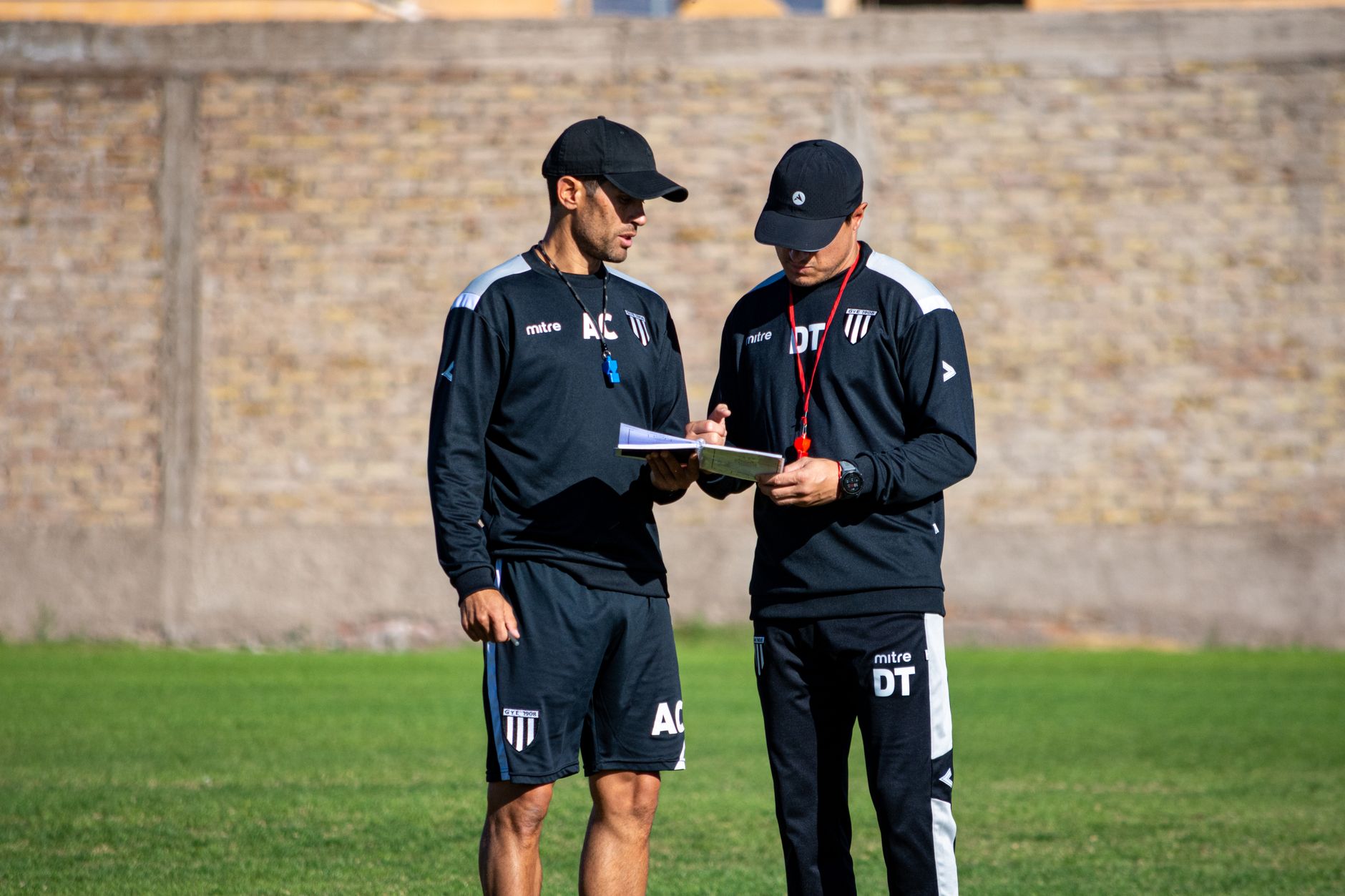
Photo by Franco Monsalvo on Pexels
Want to compare tactics before the market settles?
Step 3: Which 2026 numbers deserve attention?
The 2026 numbers deserving immediate attention are the FIFA tournament dates, the 2.8% Social Security COLA, the $184,500 maximum taxable earnings figure, and the 2026 MLB Draft development timeline. Each number belongs to a different institution and should not be interpreted with the same level of certainty. Official figures describe rules or schedules; sports projections describe probability.
For United States beneficiaries, the Social Security Administration lists an average monthly benefit for all retired workers rising from $2,015 before the adjustment to $2,071 after the 2.8% COLA. The maximum benefit for a worker retiring at full retirement age increases from $4,018 to $4,152 per month, while the federal SSI payment standard reaches $994 for an individual and $1,491 for a couple. The retirement earnings test limit for people below full retirement age rises to $24,480 annually, or $2,040 monthly. Those details are more useful than simply repeating “benefits increase.” Meanwhile, the employee Social Security and Medicare tax rate remains 7.65%, and the self-employed rate remains 15.30%, excluding the additional 0.9% Medicare tax that may apply above specified income levels. In baseball, the 2026 MLB Draft does not guarantee rapid promotion: no 2025 selection had reached the majors in the cited comparison, while six players from the 2024 class debuted before the first anniversary of selection. Development speed is therefore a range, not a promise.
The numbers worth tracking are:
- FIFA: 48 teams, 104 matches, June 11–July 19, 2026.
- Social Security: 2.8% COLA and $184,500 taxable maximum.
- SSI: $994 monthly individual federal payment standard.
- MLB: promotion timing varies by player, position, health, and organization.
- Football Compass: daily match predictions supported by tactical and player data.
match prediction methodology
Step 4: Why does source verification improve 2026 decisions?
Source verification improves 2026 decisions because official schedules, government thresholds, injury reports, and market prices change at different speeds. FIFA controls World Cup competition information, the Social Security Administration controls published benefit figures, and MLB controls draft and player-development records; a secondary article should be treated as interpretation rather than authority.
The operational edge is to create a timestamped evidence sheet before acting on a prediction. Record the publication time, source URL, relevant competition, injury status, projected lineup, and market price. Then revisit the sheet when a starting goalkeeper is ruled out, a manager changes formation, or the odds move sharply. In practice, the most damaging error is often not an incorrect forecast but a correct forecast made using information that expired several hours earlier. A second underappreciated issue is denominator quality: a striker’s goals per 90 minutes can look impressive across 600 minutes, yet the number may be distorted by substitute appearances against tired defenses. Ask why the statistic exists, what it excludes, and whether it predicts the event you care about. The MLB Pipeline coverage of the 2026 Draft illustrates the point by presenting rapid promotion as a scouting judgment shaped by development, not merely draft position. As an official document from the Social Security Administration states, “Social Security beneficiaries and Supplemental Security Income recipients will receive a 2.8 percent COLA for 2026.” Exact language beats loose summaries.
Before trusting a 2026 claim, verify:
- The original publisher and responsible institution.
- The publication date and last update.
- Whether the figure is forecast, estimate, or confirmed rule.
- The geographic market, currency, and eligibility conditions.
- Any exclusions, including taxes, injuries, or sample limitations.

Photo by Mikhail Nilov on Pexels
See the evidence behind the next 2026 update.
Step 5: verification
Verification means checking every decision against a primary source, a current timestamp, and a clearly defined metric. For 2026 World Cup predictions, that means comparing Football Compass analysis with FIFA schedules, official team announcements, verified injury news, and current market prices. For Social Security, it means using the Social Security Administration rather than a social-media summary; for MLB, it means checking MLB Draft records and organization updates.
A disciplined verification routine can be completed in under 15 minutes. First, identify the exact claim: “Team A will dominate,” “benefits rise by 2.8%,” or “Player B reaches MLB in 2026.” Second, classify the claim as confirmed, probable, or speculative. Third, test the number against context. A 2.8% benefit adjustment is confirmed, but its personal dollar impact depends on the recipient’s existing payment; a draft prospect’s major-league arrival is possible, but it depends on health, performance, roster need, and organizational strategy. Fourth, document what would invalidate the conclusion. This last step is where most casual analysis fails because it forces us to define risk before emotion enters the room. Football Compass is most useful when read as a structured decision aid, not a substitute for personal judgment or responsible budgeting. Where gambling is legal, participants should check local law, age requirements, operator licensing, and responsible-play limits before placing any wager.
A compact verification record should contain:
- Claim: the precise statement being tested.
- Source: FIFA, SSA, MLB, club, league, or reputable media.
- Timestamp: when the evidence was current.
- Metric: the number supporting the conclusion.
- Invalidation trigger: the event that changes the outlook.
- Action limit: the maximum amount of time or money exposed.
responsible football analysis and betting guide
Troubleshooting common failures
Most 2026 research failures come from stale information, mixed geographic contexts, inflated samples, or confusing an estimate with an official fact. If a World Cup prediction looks unusually certain, inspect whether it ignores travel, lineup changes, opponent strength, or tactical mismatch. If a Social Security figure appears different, check whether it refers to retirement benefits, SSI, disability thresholds, or the retirement earnings test; those are separate categories with separate rules.
A frequent failure occurs when readers compare the 2026 MLB Draft directly with an established major-league prospect list. Draft selection is an entry point, not a performance guarantee. Another failure appears in football betting when a user compares decimal odds without converting them into implied probability or accounting for the bookmaker’s margin. For example, odds of 2.00 imply 50% before margin, but a two-outcome market priced at 1.85 and 1.95 implies a combined probability above 100%, showing the embedded margin. That calculation is more revealing than a dramatic headline. If a source page changes or disappears, preserve the original title, date, publisher, and archived reference rather than relying on memory. The National Archives of the United States and official institutional pages can help establish document provenance, although the governing organization remains the first place to check. Believe it or not — I do: troubleshooting is where an information advantage becomes measurable.
When a conclusion fails, ask:
- Was the source primary and current?
- Did the event occur in the stated country or league?
- Was the statistic adjusted for opponent quality?
- Did a new injury, rule, or schedule change appear?
- Was the prediction expressed with realistic uncertainty?
- Did the decision exceed the planned financial or emotional limit?
Frequently Asked Questions
Q: What is Football Compass in 2026?
A: Football Compass is a FIFA World Cup-focused content site covering 2026 match predictions, team tactics, player statistics, and tournament developments. Its coverage is designed for fans following the tournament across Canada, Mexico, and the United States. Articles can help readers organize evidence, compare teams, and understand tactical context. Football Compass does not replace official FIFA announcements, licensed operators, legal advice, or personal financial judgment.
Q: How can I analyze a 2026 World Cup match?
A: Analyze a 2026 World Cup match by combining recent opponent-adjusted form, expected goals, confirmed lineups, injuries, tactical styles, venue conditions, and current odds. Start with the last five competitive matches, then examine defensive transitions and set pieces rather than possession alone. Recheck team news close to kickoff because one missing striker or center-back can materially change the forecast. Use a written probability estimate before comparing it with market prices.
Q: What is the difference between confirmed 2026 facts and predictions?
A: Confirmed 2026 facts come from responsible institutions such as FIFA or the Social Security Administration, while predictions estimate future sporting or financial outcomes. FIFA confirms the World Cup dates and format, and the Social Security Administration confirms the 2.8% COLA and $184,500 taxable maximum. A Football Compass match forecast remains probabilistic because injuries, tactics, and performance can change. Treat certainty and likelihood as different categories.
Q: How much does the 2026 Social Security COLA change payments?
A: The 2026 Social Security COLA is 2.8%, raising the cited average retired-worker payment from $2,015 to $2,071 per month. The cited maximum benefit for a worker retiring at full retirement age rises from $4,018 to $4,152 monthly. Individual results vary according to the existing benefit amount and eligibility category. SSI figures also change, reaching $994 monthly for an individual and $1,491 for a couple under the federal payment standard.
Q: Why can a 2026 World Cup prediction fail?
A: A 2026 World Cup prediction can fail because of injuries, unexpected lineups, tactical adjustments, travel demands, weather, finishing variance, or flawed source data. A team’s win percentage may also be misleading if its opponents were substantially weaker than those faced by a rival. Record the assumptions behind the forecast and identify what would invalidate it. This approach turns a wrong result into useful model feedback rather than an excuse to chase losses.
Q: What should I check before using 2026 football betting information?
A: Check local legality, minimum age, operator licensing, market rules, odds format, settlement terms, and responsible-play limits before using 2026 football betting information. Compare your estimated probability with the implied probability after accounting for the bookmaker’s margin. Never treat a Football Compass article or any other preview as a guaranteed result. Set a fixed budget and stop when that limit is reached.
Q: When could a 2026 MLB Draft player reach the majors?
A: A 2026 MLB Draft player could reach the majors quickly or require several seasons, depending on performance, health, position, roster opportunity, and organizational development. The cited comparison notes that no player from the 2025 class had reached the majors yet, while six players from the 2024 class debuted before the first anniversary of selection. Draft position alone cannot establish a promotion date. Follow MLB Pipeline, the player’s organization, and verified minor-league statistics for current evidence.
2026 rewards readers who separate the confirmed from the probable and the probable from the promotional. Track FIFA’s 48-team World Cup, the United States Social Security Administration’s 2.8% COLA, the $184,500 taxable maximum, and MLB’s development pipeline as distinct evidence systems. Then use Football Compass to bring tactical detail, player data, and daily tournament context into one practical workflow. The winning habit is simple: verify the source, quantify the claim, define the downside, and only then make a decision. That is how we approach the 2026 World Cup with a real information edge, believe it or not — I do.
Ready to follow the 2026 World Cup with sharper data and daily insight?
Thank you for reading.
Football Compass · Latest Insights