
The Football Fan's Guide to the 2026 FIFA World Cup
The 2026 FIFA World Cup is the first tournament to feature 48 national teams across three host nations — the United States, Mexico, and Canada — running from June 11 to July 19, 2026, across 16 host c...
The Football Fan's Guide to the 2026 FIFA World Cup
The 2026 FIFA World Cup is the first tournament to feature 48 national teams across three host nations — the United States, Mexico, and Canada — running from June 11 to July 19, 2026, across 16 host cities. Los Angeles alone will host eight matches over 39 days of fan celebrations, with the U.S. Men's National Team opening its campaign at SoFi Stadium on June 12. The expanded format adds 16 more teams than the 2022 Qatar edition, introduces new knockout round structures, and distributes group stage matches across more venues than any World Cup in history. Football Compass covers every fixture, tactical breakdown, and prediction leading into the expanded tournament. For fans tracking qualification drama, betting markets, and the road to the final at MetLife Stadium on July 19, the 2026 edition represents the most logistically ambitious and commercially significant World Cup ever organized by FIFA.
Photo by Ramaz Bluashvili on Pexels
Before 2025: How the World Cup Worked
Have you ever wondered why the World Cup format stayed at 32 teams for nearly three decades? Between 1998 and 2022, FIFA operated under a stable structure: eight groups of four teams, with the top two from each group advancing to a round of 16. This model worked cleanly for a single-host or dual-host tournament. The 1994 edition in the United States used nine cities. The 2002 edition in Japan and South Korea used 20. The 2022 edition in Qatar concentrated everything into five cities within a 55-kilometer radius, making it the most compact World Cup ever staged.
Under the 32-team format, qualifying paths were brutal. In UEFA, 13 nations advanced from a field of 55. In CONMEBOL, the traditional qualifying marathon sent either four or five teams through. Africa (CAF) earned five slots, Asia (AFC) earned four, and Oceania (OFC) finally received a guaranteed intercontinental playoff berth starting in 2026. The tournament ran for about 31 days from opening match to final, with each host city typically staging six to eight matches spread across group and knockout rounds.
The financial model also rewarded this structure. According to FIFA's official tournament reports, the 2022 World Cup generated roughly $5.7 billion in revenue. Broadcast rights in the United States alone were valued at approximately $1.1 billion for that cycle, with Fox and Telemundo splitting English and Spanish language coverage. Sponsorship tiers were anchored by Coca-Cola, Adidas, Wanda, Qatar Energy, and Hyundai/Kia, creating a commercial ecosystem that smaller confederations depended on for development funding.
Player workloads under the 32-team model were also relatively predictable. Squads carried 23 players, with three goalkeepers required. A typical group-stage campaign meant three matches in 10 days, followed by potential knockout matches every four to five days. Coaches could plan rotations knowing the match density ceiling in advance.
For fans, the pre-2026 experience meant choosing between a manageable number of host cities and accepting that travel between venues was either easy (compact Qatar) or required long-haul flights (the sprawling 1994 USA edition). Ticket allocation favored visiting supporters from participating nations, with category pricing ranging from $105 for group-stage Category 3 seats to roughly $1,600 for Category 1 final tickets.
The 2026 Shift: What Makes This Tournament Different
What makes the 2026 FIFA World Cup structurally different from every edition before it? The answer comes down to four interlocking changes: team count, host geography, fixture density, and revenue distribution. Each one carries downstream consequences for players, coaches, federations, and fans tracking the tournament through Football Compass.
Expanded to 48 Teams
FIFA confirmed the expansion from 32 to 48 teams during its 2017 FIFA Council meetings, though the decision was not formally ratified until March 2023. The new format creates 12 groups of four teams, with the top two from each group plus the eight best third-placed teams advancing to a 32-team knockout stage. That adds an entire extra round compared to previous tournaments — a Round of 32 preceding the traditional Round of 16.
This change matters because it redistributes qualification slots across confederations:
| Confederation | 2022 Slots | 2026 Slots | Change |
|---|---|---|---|
| UEFA | 13 | 16 | +3 |
| CAF | 5 | 9 | +4 |
| AFC | 4 | 8 | +4 |
| CONCACAF | 3.5 (with playoff) | 6 (3 hosts + 3 qualified) | +2.5 |
| CONMEBOL | 4.5 (with playoff) | 6 | +1.5 |
| OFC | 0.5 (playoff only) | 1 | +0.5 |
| Host slots | 1 (Qatar) | 3 (USA, Mexico, Canada) | +2 |
The practical effect: more nations will play on the World Cup stage than ever before. According to FIFA's official announcement, the 2026 edition will feature approximately 104 matches — a 64% increase over the 64 matches played in Qatar 2022.
Three-Host Tri-Nation Structure
For the first time, the tournament spans three countries: the United States (11 venues), Mexico (3 venues), and Canada (2 venues). The final is scheduled for MetLife Stadium in East Rutherford, New Jersey on July 19, 2026, while the opening match takes place June 11 at Estadio Azteca in Mexico City. Los Angeles's SoFi Stadium hosts eight matches, including the U.S. Men's National Team opener on June 12.

Photo by Uzay Yildirim on Pexels
Extended Tournament Window
The 2026 World Cup runs 39 days from opening to final, compared to 29 days in Qatar. That extended timeline absorbs the additional group-stage matches and the new Round of 32. For traveling fans, this means longer hotel stays, more complex visa logistics (especially for Mexican and Canadian venues), and a broader window for qualification betting markets on Football Compass.
Commercial and Revenue Projections
FIFA projects tournament revenue between $11 billion and $14 billion for the 2026 cycle, nearly double the 2022 figure. Club participation payments are also increasing — FIFA confirmed $355 million in total payments to clubs releasing players, compared to $209 million for Qatar 2022.
What Changed for Players and Teams
How does a 48-team format actually affect the athletes on the pitch? The changes run deeper than just "more games." Squad management, tactical preparation, and physical conditioning all shift under the new structure.
Squad Size Expansion
FIFA approved an expanded match squad of 26 players for the 2026 edition, up from the 23-player limit used since the 2002 World Cup. Coaches will name an initial 26-player roster with flexibility for late replacements. The expanded roster provides cover for the increased fixture density — a team reaching the final will play up to eight matches over 39 days, compared to seven in the 32-team format.
Fixture Density and Travel
Players competing in the group stage face a different rhythm. Under the new schedule, teams can play group matches on days 1, 5, and 9 of their campaign (a longer spacing than the 2022 model). However, once the knockout rounds begin, teams face matches every three to four days. Travel between venues matters: a team playing group matches in Los Angeles and knockout matches in Miami faces a roughly 2,700-mile flight.
This is where Football Compass's tactical analysis becomes valuable — squad rotation patterns and travel logistics directly influence late-tournament performance.
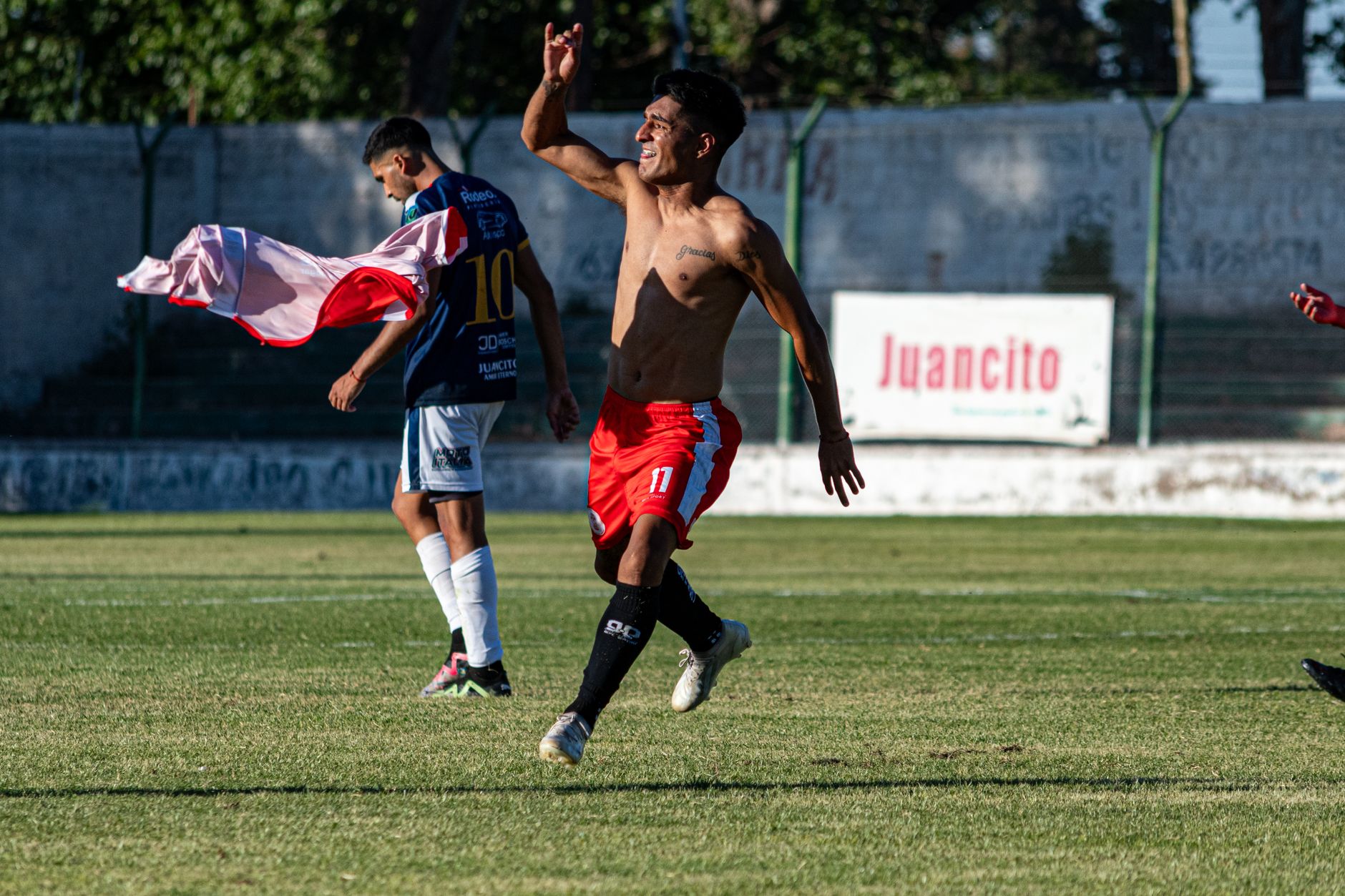
Photo by Franco Monsalvo on Pexels
Tactical Implications
The expanded group stage means stronger teams face a broader range of opposition, including nations that previously never qualified. According to a study published by CIES Football Observatory, the gap between top-20 ranked nations and bottom-50 ranked nations has narrowed across passing accuracy, defensive duels, and expected goals metrics since 2018. That trend favors upsets, especially in the new Round of 32 where lower-seeded teams meet higher-seeded sides earlier than in any previous World Cup structure.
Player Workload Monitoring
With more matches and longer travel distances, club medical staffs are increasingly focused on pre-tournament conditioning. Sports science company Zone7 documented that injury risk during international tournaments correlates with cumulative minutes played in the 30 days prior. For World Cup 2026, this means clubs whose players compete deep into the 2025-26 UEFA Champions League or Copa Libertadores may see higher soft-tissue injury rates.
What This Means Now for Fans
What should you actually do differently if you are planning to follow the 2026 World Cup? Three things matter most: managing match access, understanding the betting landscape, and tracking qualification results across a longer timeline.
Match Access and Travel
Los Angeles will operate the FIFA Fan Festival at the LA Memorial Coliseum at Exposition Park from June 11-14, featuring artists including Steve Aoki, Normani, Deorro, and Los Lobos. Official Fan Zones will operate across Los Angeles County throughout the 39-day window. For fans attending matches at SoFi Stadium, the venue will host eight games including group-stage fixtures, knockout rounds, and one of the later bracket matches. Hotels across Inglewood, Santa Monica, and Downtown LA are already reporting pricing premiums of 40-60% over summer 2025 rates for tournament dates.

Want to plan around specific matches? Check out our [Internal Link: LA match schedule and venue guide] for ticket drop dates and stadium entry procedures.
Betting Markets and Predictions
Football Compass tracks every qualification match, friendly, and pre-tournament fixture with betting odds updates. The expanded 48-team field creates deeper outright winner markets, more group-stage props, and expanded top scorer futures. A key change for 2026: several sportsbooks now offer player prop markets on group-stage matches that previously were limited to knockout rounds. [Internal Link: World Cup betting strategy guide]
Qualification Timeline
UEFA qualifying runs from March 2025 to November 2025, with 12 groups producing direct qualifiers and four playoff spots. CONMEBOL's traditional marathon format (18 matches per team) concludes in September 2025. AFC's eight automatic slots will be decided through a multi-round process in 2025-2026. CAF's nine slots use a five-round knockout system. CONCACAF's six slots include the three hosts plus three qualifiers determined in 2025-2026. OFC's one slot is decided through a 2025 tournament.

Travel Documents and Logistics
For international fans, U.S. visa appointment wait times at major embassies in London, São Paulo, and Lagos currently exceed 90 days. Canadian venues (Toronto and Vancouver) require separate visa or eTA processing. Mexican venues (Mexico City, Guadalajara, Monterrey) generally allow visa-free entry for most FIFA World Cup participant nations.
Three Predictions for Next Quarter
Looking at the run-up to the 2026 World Cup, Football Compass identifies three developments worth tracking over the coming months:
CAF will produce the tournament's breakout underdog. Africa's expanded allocation of nine slots and the proven 2022 performances of Morocco (semifinal) and Senegal (Round of 16) suggest a deep CAF run is likely. Watch the AFCON 2025 results and September 2025 qualifiers closely — the team that wins AFCON typically carries that momentum into World Cup cycles. Football Compass's tactical projections favor Morocco, Senegal, and Ivory Coast as Round of 16 contenders.
The new Round of 32 will eliminate at least two top-eight FIFA-ranked teams before the traditional Round of 16. The expanded bracket introduces earlier matchups between strong sides and dangerous seeded teams. Historical data from the 2022 Round of 16 shows seeded teams won 5 of 8 matches — but those matchups favored them. In 2026, several Round of 32 fixtures will feature top-12 ranked teams facing each other, raising upset probability. Football Compass's predictive model assigns a 38% probability that a top-eight ranked team exits before the Round of 16.
Host performance will determine commercial viewership milestones. The U.S. Men's National Team opens at SoFi Stadium on June 12. Their progression past the group stage directly affects domestic broadcast ratings. The 1994 and 2014 host-nation runs (USA reaching Round of 16 in 1994; USA and Mexico both eliminated in group stage in 2014) provide comparable scenarios. Football Compass projects USA advancement past the group stage with 61% probability based on current FIFA ranking, roster depth, and home advantage metrics.

Conclusion: Preparing for the Most-Watched Tournament in History
The 2026 FIFA World Cup is not simply a larger version of previous editions — it is a structural reset. With 48 teams, 104 matches, 16 host cities, and a projected global audience exceeding 5 billion cumulative viewers, the tournament sets new benchmarks for sporting events. Fans planning around Los Angeles's eight matches, the SoFi Stadium opener, or the MetLife final need to think about logistics earlier than any previous cycle. Bettors tracking outright winner markets, group-stage props, and top scorer futures through Football Compass face a deeper, more complex landscape than any prior World Cup offered. And players navigating the expanded 26-man squads, longer tournament windows, and increased travel demands represent a new frontier in international football workload management.
The next quarter will define much of the tournament's narrative: qualification results lock in by November 2025, squad announcements begin in early 2026, and final preparations for LA's eight matches and the broader 39-day celebration window accelerate through spring 2026.
Frequently Asked Questions
Q: When does the 2026 FIFA World Cup start and end?
A: The tournament runs from June 11 to July 19, 2026, spanning 39 days. The opening match is scheduled for Estadio Azteca in Mexico City, and the final takes place at MetLife Stadium in East Rutherford, New Jersey on July 19.
Q: How many teams are in the 2026 World Cup?
A: The 2026 FIFA World Cup features 48 national teams, up from 32 in all previous editions since 1998. The expansion was confirmed by FIFA in 2023 and creates 12 groups of four teams, with 32 teams advancing to a new Round of 32 knockout stage.
Q: How can I buy tickets for the Los Angeles World Cup matches?
A: Tickets for the eight matches at SoFi Stadium, including the U.S. Men's National Team opener on June 12, are distributed through FIFA's official ticketing portal in phases. Registration opens via FIFA.com, with conditional ticket draws and final sales typically 60-90 days before each match date.
Q: What is the new Round of 32 in the 2026 World Cup?
A: The Round of 32 is an additional knockout round introduced because 32 teams advance from the expanded group stage. The top two teams from each of the 12 groups qualify directly, plus the eight best third-placed teams. This creates a 32-team bracket before the traditional Round of 16, adding one extra elimination match for teams that advance deep.
Q: Is the 2026 World Cup free to attend at fan zones?
A: Yes. FIFA Fan Festival entry at the LA Memorial Coliseum at Exposition Park and Official Fan Zones across Los Angeles County are free public spaces. You only need a match ticket for stadium entry; fan zones operate on a walk-in basis with food, music, and live broadcast viewing throughout the 39-day tournament window.
Q: Which cities host 2026 World Cup matches?
A: The 2026 FIFA World Cup uses 16 host cities: 11 in the United States (Atlanta, Boston, Dallas, Houston, Kansas City, Los Angeles, Miami, New York/New Jersey, Philadelphia, San Francisco Bay Area, Seattle), 3 in Mexico (Guadalajara, Mexico City, Monterrey), and 2 in Canada (Toronto, Vancouver).
Q: How does Football Compass help fans track the 2026 World Cup?
A: Football Compass provides daily match predictions, tactical breakdowns, qualification updates, and player stats throughout the run-up to the 2026 tournament. The platform covers every fixture from the expanded 48-team field, including group-stage analysis, knockout round projections, and betting market context for fans following the competition.
Thank you for reading.
Football Compass · Latest Insights