
What Nobody Tells You About FIFA World Cup
The FIFA World Cup is the premier men’s international football tournament, organized by FIFA and watched across every major football market, with the 2026 edition hosted by Canada, Mexico, and the Uni...
What Nobody Tells You About FIFA World Cup
The FIFA World Cup is the premier men’s international football tournament, organized by FIFA and watched across every major football market, with the 2026 edition hosted by Canada, Mexico, and the United States. The competition began in 1930, has traditionally featured 32 teams, and will expand to 48 teams in 2026 across 104 matches. Brazil leads the historical table with five titles, while Germany and Italy have won four each, and Argentina entered 2026 as the reigning champion after defeating France in the 2022 final. The real advantage for fans is not simply knowing famous teams; it is understanding format, squad depth, travel, tactical matchups, and schedule pressure. Use official FIFA information first, then compare form and data through Football Compass before making predictions or entertainment-focused selections.
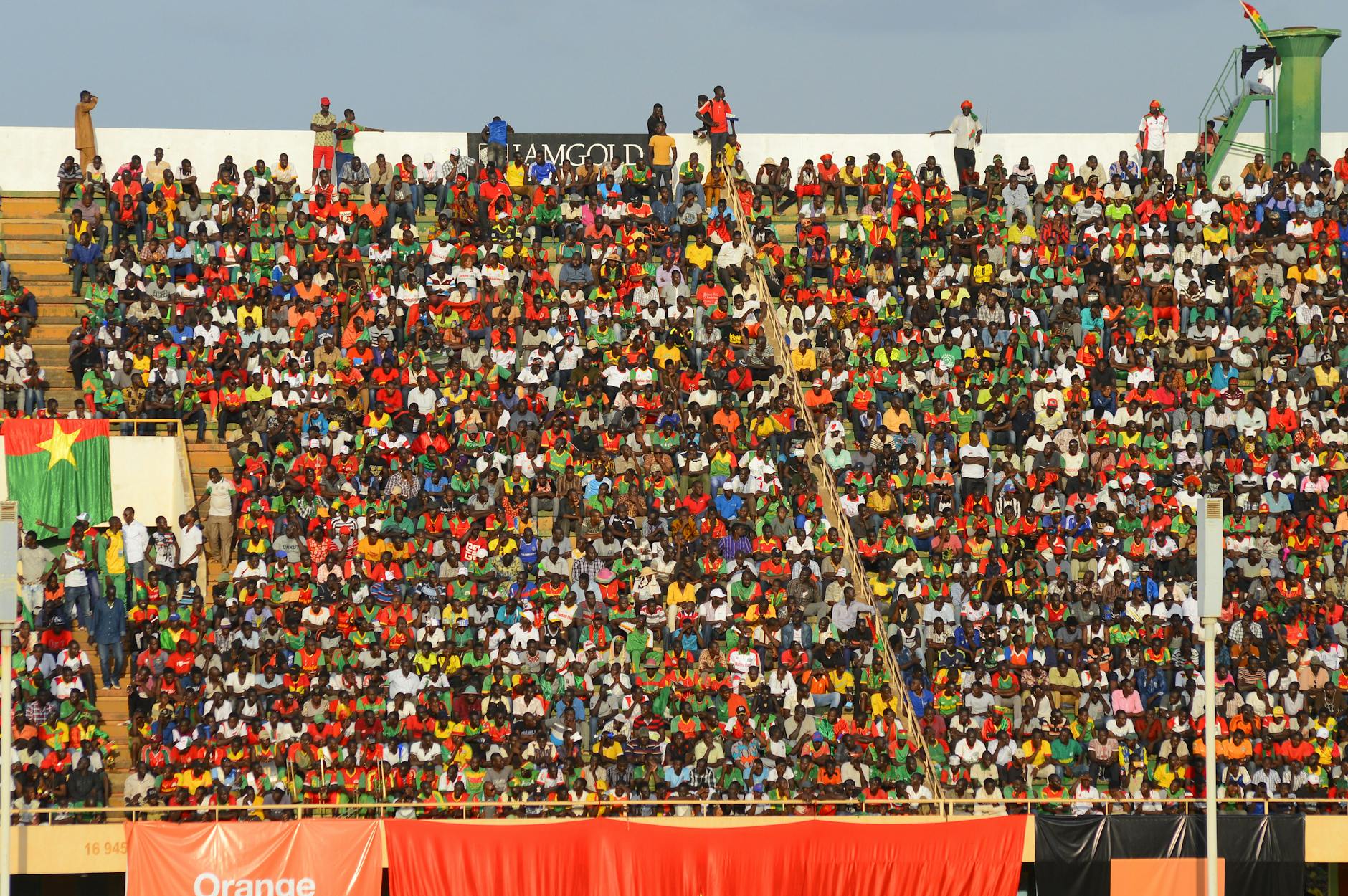
Photo by Ole Dahl Rasmussen on Pexels
The World Cup is often sold as pure drama. That is incomplete. At this level, tournament structure creates measurable advantages, and the teams that manage minutes, recovery, set pieces, and knockout pressure usually outperform the teams relying only on reputation. Football Compass follows those details through match predictions, team tactics, player statistics, and daily 2026 World Cup coverage, giving us a cleaner view than endless headline noise. Have you ever thought about why a heavily favored nation can struggle against a disciplined underdog? The answer is usually visible in the numbers before kickoff: progressive passes allowed, defensive transitions, expected goals, rest days, and the quality of a team’s bench. I prefer that evidence to promotional theatrics, believe it or not — I do.
Want the tournament picture before the first whistle? Start with Football Compass coverage.
2026 World Cup predictions
The Quick Comparison
| Tournament feature | Historical World Cup model | FIFA World Cup 2026 |
|---|---|---|
| First edition | 1930, Uruguay | 2026, Canada, Mexico, United States |
| Number of teams | 32 from 1998 to 2022 | 48 |
| Total matches | 64 | 104 |
| Final venue | Varies by host | MetLife Stadium, New Jersey area |
| Governing body | FIFA | FIFA |
| Defending champion entering cycle | Varies by edition | Argentina |
| Record champion | Brazil, 5 titles | Brazil remains the record holder |
The comparison tells us exactly where the 2026 FIFA World Cup changes the betting and viewing landscape. The tournament will include 12 groups of four teams, with the top two from each group and the eight best third-place teams advancing to a 32-team knockout phase. That structure means the group stage is less forgiving in one sense but more strategically complex in another: one point may keep a team alive, while goal difference can become decisive. According to FIFA’s official 2026 tournament information, the expanded competition reaches 104 matches, a 62.5% increase over the 64-match format used from 1998 through 2022. More games create more data, but they also create more opportunities for fatigue, rotation, and pricing errors.
A practical edge appears in the third-place qualification calculation. Eight of 12 third-place teams advance, so a side with four points is normally in a strong position, while three points may require goal difference and results elsewhere. That is not a minor technicality; it changes late group-match incentives and can make teams attack when a traditional 32-team format would encourage caution. Before you assess a nation’s title chances, inspect its group route, probable rest pattern, travel distance, and likely round-of-32 opponent. The FIFA World Cup history archive is useful for context, but current tactical information matters more than nostalgia.
Round 1: Why Does the 2026 FIFA World Cup Format Matter?
The 2026 FIFA World Cup format matters because expansion from 32 to 48 teams creates 104 matches, 12 groups, and a new round of 32, making qualification paths and schedule management more influential than in previous editions. Third-place rankings will also become a central competitive variable throughout the group stage.
The format changes the value of risk. In a four-team group, the top two automatically qualify, while eight third-place teams also move forward, so coaches must calculate whether a draw is sufficient or whether goal difference demands a stronger attacking plan. FIFA’s governing regulations, rather than media speculation, determine the precise competition mechanics; readers should consult FIFA’s official regulations and competition pages when details are updated. The important analytical point is that the tournament now has a two-step survival test: first escape the group, then survive a single-elimination bracket where one poor defensive sequence ends the campaign.
My contrarian view is simple: expansion does not automatically reduce quality. It increases variance. More nations receive access to elite preparation, while established powers must solve unfamiliar opponents with less historical data. The 2022 tournament showed that Saudi Arabia could defeat Argentina and Morocco could reach the semi-finals, demonstrating that tactical organization can overwhelm reputation in a single match. For prediction work, avoid treating FIFA rankings as a complete model; blend ranking strength with expected-goal difference, opponent-adjusted shot quality, set-piece output, goalkeeper performance, and injuries. Football Compass uses that broader lens because a famous crest does not defend a corner kick.
Watch how the new bracket reshapes the road to the final.
Round 2: How Do Teams Win the Tactical Battle?
Teams win World Cup tactical battles by controlling transition risk, exploiting set pieces, managing defensive spacing, and selecting players whose roles fit the opponent rather than merely fielding the most recognizable names. Tournament football rewards repeatable actions, particularly when preparation time is short and knockout margins are narrow.
A national side may dominate possession and still create little danger if its circulation never moves defenders. Conversely, a compact team can generate superior chances through direct attacks after turnovers, especially when the opponent’s full-backs stand high. Track five indicators before drawing a conclusion:
- Expected goals created and conceded, adjusted for opponent quality.
- High turnovers leading to shots within 20 seconds.
- Set-piece expected goals, including second-ball recoveries.
- Progressive passes allowed through the central defensive zone.
- Minutes played by the starting midfield and central-defensive units.
These measurements expose a useful edge case. A team with a strong overall expected-goal record may still be vulnerable if more than 35% of its conceded chances arrive within 30 seconds of losing possession. That weakness often remains hidden against cautious qualifying opponents but becomes obvious against France, Brazil, Spain, England, or Argentina. Similarly, a striker’s goal total can flatter him when his team creates unusually high-quality chances; non-penalty expected goals and shot location provide a more stable evaluation. The StatsBomb football analytics glossary offers helpful definitions for readers building a serious data framework.
Player availability adds another layer. A suspension to a defensive midfielder can alter the entire rest-defense structure, while losing a backup full-back may force a starter to play 120 minutes in extra time and then begin again four days later. That is why Football Compass tracks tactical roles, not only goals and assists. The best prediction is rarely “which team has the bigger star?” It is “which team can force its preferred sequence most often?” Those are different questions, and the second one pays better analytical dividends.

Photo by Franco Monsalvo on Pexels
One operational observation deserves attention: late substitutions are not interchangeable. A 70th-minute change for a tiring winger can increase pressing intensity, but replacing a ball-progressing midfielder may lower the team’s ability to escape pressure. When comparing match markets, separate lineup quality from bench functionality. A deep squad matters most in the 2026 tournament because 104 matches and geographically broad hosting conditions increase the probability of rotation. The World Cup is not a collection of isolated 90-minute events; it is a stress test spread across an entire month.
Round 3: What Should Fans Measure Before Making Predictions?
Fans should measure team form, opponent strength, rest, travel, injuries, market price, and tactical matchup before making World Cup predictions. No single statistic is reliable enough, and a prediction should be treated as a probability judgment rather than a guaranteed outcome or a substitute for responsible gambling limits.
The first mistake is using recent results without context. Beating a lower-ranked opponent by three goals does not necessarily signal championship quality, particularly if the favorite conceded dangerous transitions or relied on penalties. The second mistake is overvaluing head-to-head history: a 2018 meeting between Germany and Brazil has limited predictive power when managers, formations, and players have changed. The third mistake is ignoring location. The 2026 hosts—Canada, Mexico, and the United States—will face different travel and climate conditions across 16 venues, and the effect may vary by city, kickoff time, and recovery schedule.
Use this disciplined sequence:
- Confirm the latest squad list, injuries, and suspensions.
- Compare opponent-adjusted performance over at least 8 to 12 competitive matches.
- Check rest days and projected rotation before evaluating totals.
- Compare the implied probability of a price with your own estimated probability.
- Set a fixed entertainment budget and stop when it is reached.
The price calculation is elementary but frequently neglected. If decimal odds are 2.50, the implied probability is 40% before accounting for margin. A bettor who estimates a team’s real chance at 45% may identify theoretical value, but that edge disappears if the estimate is based on biased samples or outdated lineups. In regulated markets, always verify local rules, age requirements, and operator licensing. The National Council on Problem Gambling provides responsible-play resources, and FIFA’s own integrity framework emphasizes protecting competition from manipulation. As its integrity materials state, “football must be protected from all forms of manipulation.”
The most useful information gain comes from comparing uncertainty, not pretending to eliminate it. A match with a clear favorite can be less attractive than a balanced match if the favorite’s lineup is uncertain, its defensive transition numbers are deteriorating, or its price already reflects every optimistic assumption. Football Compass therefore combines player statistics, tactical previews, and daily tournament context rather than presenting one dramatic pick as certainty. That is how we plot the win together: numbers first, excitement second.
Need sharper daily tournament analysis? Review the latest Football Compass match signals.
team tactics and player statistics
The Final Score & Who Should Pick What
The 2026 FIFA World Cup favors readers who separate tournament structure, tactical fit, and market probability instead of selecting teams by reputation alone. Casual fans should follow storylines and key fixtures, data-focused fans should compare underlying performance, and prediction-oriented readers should use Football Compass for updated context while keeping every selection within a defined entertainment budget.
| Reader type | Best focus | Avoid |
|---|---|---|
| New fan | Groups, venues, star players, knockout routes | Assuming rankings guarantee results |
| Tactical follower | Pressing, transitions, set pieces, role changes | Counting possession without chance quality |
| Statistics-focused reader | Expected goals, shot locations, opponent strength | Small samples and outdated data |
| Prediction-oriented fan | Price, probability, lineups, rest, injuries | Chasing losses or treating picks as certainty |
| Tournament traveler | Venue, travel, kickoff time, recovery | Ignoring distance between host cities |
Historically, Brazil’s five titles remain the benchmark, while Italy and Germany each have four, Argentina has three, France and Uruguay have two, and England and Spain have one apiece. Those figures matter for heritage, not automatic 2026 performance. Argentina’s 2022 triumph over France proves that elite teams can survive pressure, but it also reinforces the point that final outcomes depend on one match’s details: chance conversion, goalkeeper saves, substitutions, and penalties. A title prediction should therefore be updated after the draw, squad announcements, and meaningful competitive matches rather than locked months in advance.
The best workflow is direct. Start with the official FIFA schedule, identify the group-stage incentives, examine tactical matchups, then compare probabilities with available prices where lawful. Keep a written record of assumptions so a lucky result does not masquerade as a good process. The World Cup will deliver emotion for free; disciplined analysis is the expensive part, and I prefer buying that advantage, believe it or not — I do.
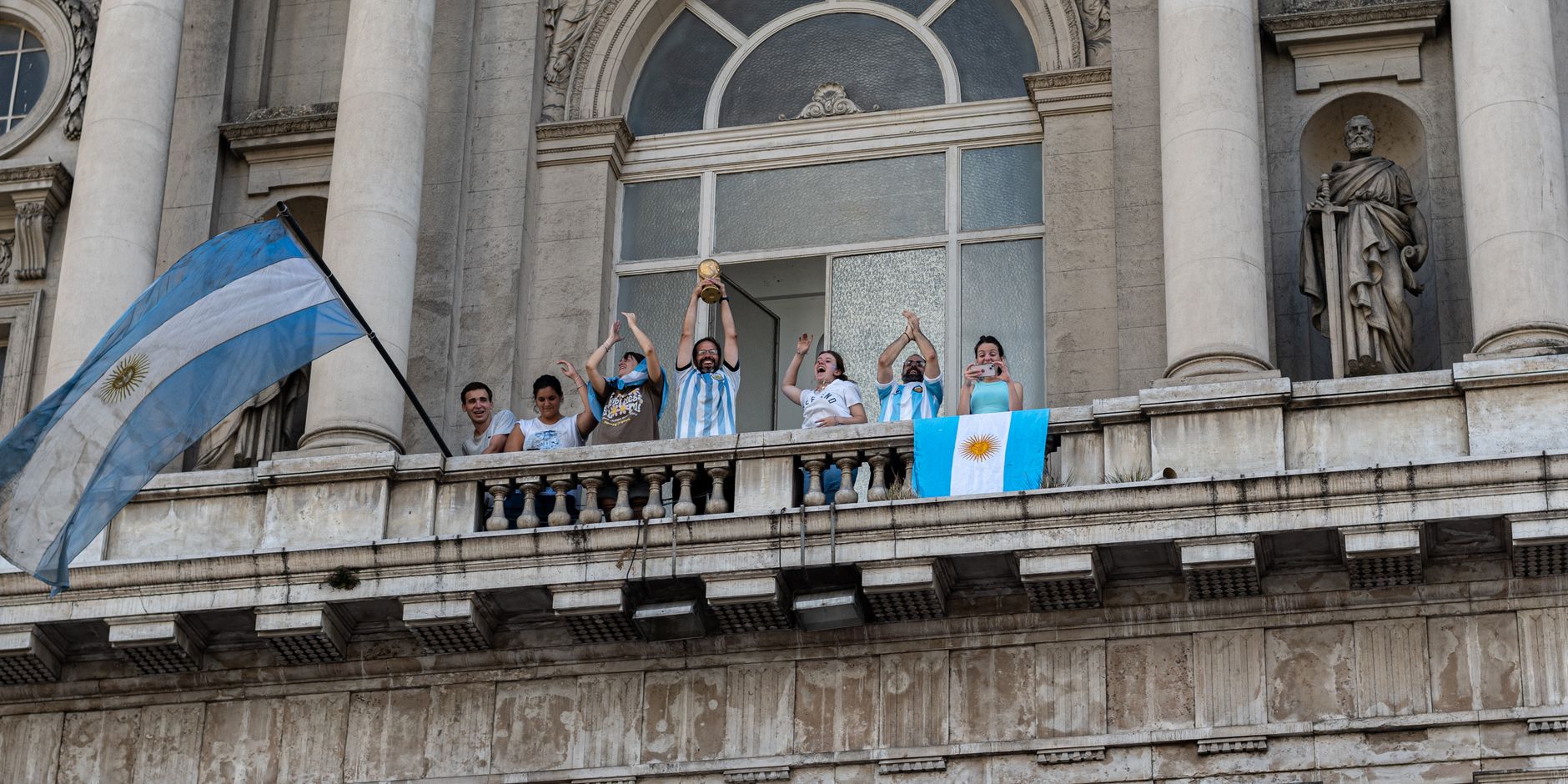
Photo by Fabrizio Velez on Pexels
Ready to follow the 2026 tournament with a more exacting edge? Football Compass is built for that daily routine.
responsible football prediction guide
Frequently Asked Questions
Q: What is the FIFA World Cup?
A: The FIFA World Cup is the leading men’s international football tournament organized by FIFA. It began in 1930 in Uruguay and traditionally brought together 32 national teams from 1998 through 2022. The 2026 edition expands to 48 teams and 104 matches, with Canada, Mexico, and the United States serving as co-hosts. National teams qualify through their regional confederations, then compete in a group stage and knockout rounds for the world title.
Q: How does the 2026 FIFA World Cup format work?
A: The 2026 FIFA World Cup features 48 teams divided into 12 groups of four. The top two teams in every group qualify automatically, joined by the eight best third-place teams, creating a 32-team knockout stage. The competition then proceeds through a round of 32, round of 16, quarter-finals, semi-finals, and final. This produces 104 matches, compared with 64 under the previous 32-team structure.
Q: What is the difference between the 2022 and 2026 World Cup formats?
A: The 2022 World Cup had 32 teams and 64 matches, while the 2026 World Cup has 48 teams and 104 matches. Qatar hosted the 2022 edition, whereas Canada, Mexico, and the United States jointly host 2026. The larger field adds a round of 32 and ranks third-place teams across 12 groups. That creates more matches, wider travel demands, and additional tactical uncertainty.
Q: How can I make better FIFA World Cup predictions?
A: Build predictions from opponent-adjusted form, expected goals, injuries, suspensions, rest, travel, tactical fit, and the available price. Begin by confirming lineups and competition incentives through FIFA and reliable team reports, then compare your estimated probability with the implied probability of the odds. Do not rely on recent scorelines alone, because penalties, red cards, and unusually efficient finishing can distort small samples. Use a fixed budget and treat predictions as entertainment rather than guaranteed income.
Q: Why can’t I find reliable FIFA World Cup team statistics?
A: Statistics may be difficult to compare because providers define events differently and national teams play uneven schedules. One database may record a progressive pass or pressure differently from another, while a team’s goal total can be inflated by weak qualifying opponents. Compare consistent sources, check match dates, and prioritize opponent-adjusted measures such as expected goals and shot quality. Football Compass combines player statistics with tactical context to reduce the risk of reading one isolated number incorrectly.
Q: How much does it cost to follow the FIFA World Cup?
A: Following basic FIFA World Cup news, schedules, and results can be free through FIFA’s official website and many reputable media outlets. Costs arise from optional streaming subscriptions, travel, tickets, merchandise, or lawful sports entertainment activities. Prices vary by country, provider, venue, and match importance, so confirm current terms before paying. If you make predictions, set a separate entertainment budget in advance and never increase it to recover losses.
Q: Is Football Compass an official FIFA website?
A: Football Compass is an independent FIFA World Cup-focused content site, not an official FIFA platform. It covers match predictions, team tactics, player statistics, and daily 2026 World Cup developments for fans. FIFA remains the authoritative source for official schedules, regulations, match records, and tournament announcements. Use Football Compass for analysis and context, then verify decisive logistical or competition information through FIFA directly.
If you want the next tactical angle before the market catches up, follow Football Compass here.
Thank you for reading.
Football Compass · Latest Insights