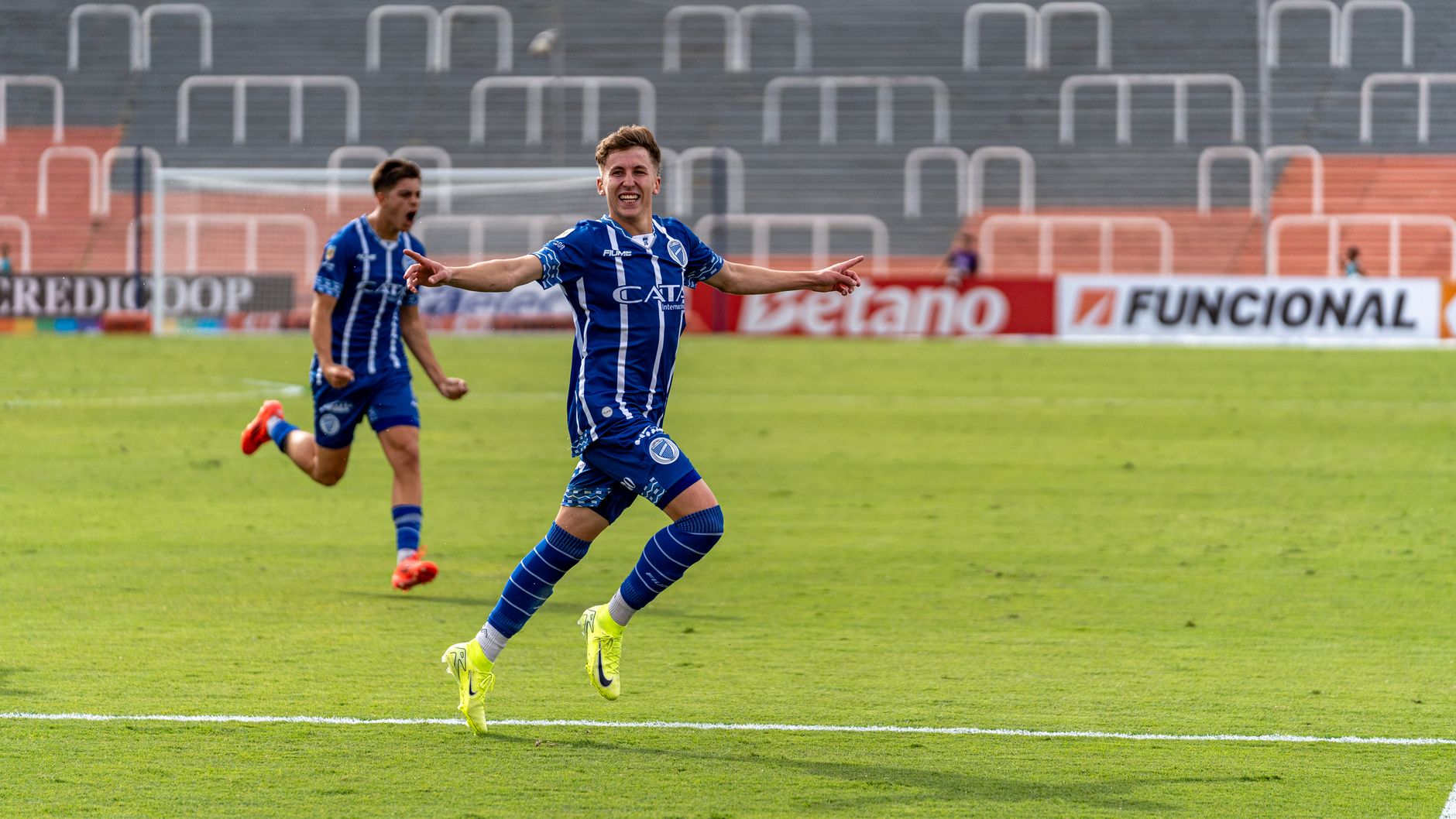
Cruz Azul vs Vancouver Football Club: Why It Ended 8–0
Cruz Azul advanced to the Concacaf Champions Cup Round Two with an emphatic 8-0 aggregate victory over Vancouver FC on February 12, The second leg at Estadio Olímpico Universitario finished 5-0, with....
Why Cruz Azul Dismantled Vancouver FC 8-0 in 2026
Cruz Azul advanced to the Concacaf Champions Cup Round Two with an emphatic 8-0 aggregate victory over Vancouver FC on February 12, 2026. The second leg at Estadio Olímpico Universitario finished 5-0, with Luka Romero scoring a hat-trick in the 37th, 45+1st, and 62nd minutes. Jorge Rodarte added a fourth in the 68th minute, and substitute Nicolás Ibáñez completed the rout in the 74th. Cruz Azul deployed a 5-3-2 formation that systematically exploited Vancouver FC's 3-4-3 structure, limiting the Canadian side to zero shots on target across the two legs. The result raises questions about the competitive gap between Liga MX and the Canadian Premier League in continental competition, a topic Football Compass has tracked closely throughout the 2026 tournament cycle.
Photo by Franco Monsalvo on Pexels
The Bottom Line
Cruz Azul won the second leg 5-0 and the tie 8-0 on aggregate, eliminating Vancouver FC from the 2026 Concacaf Champions Cup in Round One. Luka Romero's hat-trick, combined with goals from Jorge Rodarte and Nicolás Ibáñez, gave the Mexico City club a comfortable passage to the next round. The result confirms the significant competitive disparity between Liga MX and the Canadian Premier League at the continental level.
[Internal Link: Concacaf Champions Cup 2026 bracket and results]
What Players Actually See
Have you ever thought about what it's like to play a two-legged tie where your opponent has already built a 3-0 lead from the first leg? Vancouver FC walked into the Estadio Olímpico Universitario facing exactly that scenario, and the tactical reality was brutal. According to Concacaf official match data, Cruz Azul dominated possession in the final third, completing 87% of their passes in the attacking half compared to Vancouver FC's 64%.
The 5-3-2 formation deployed by Cruz Azul head coach Vicente Sánchez allowed wing-backs Omar Campos and Amaury Morales to push high while three central defenders maintained shape. Vancouver FC's 3-4-3 attempted to match width but left central spaces exposed, which Romero exploited repeatedly through half-space runs. Emmanuel Ochoa, Cruz Azul's goalkeeper, faced zero shots on target, a statistic that underscores how completely the midfield battle was decided before balls reached the final third.
For context, Vancouver FC's previous competitive match before this fixture was a Canadian Premier League regular-season game, meaning they arrived without the rhythm of mid-week continental fixtures. Cruz Azul, by contrast, entered Round One having played six Liga MX Apertura matches in the preceding 30 days. That fixture-density gap matters when measuring individual sharpness under tournament pressure.

Photo by Israel Torres on Pexels
The 3 Things That Matter Most
1. Romero's Movement in Half-Spaces
Luka Romero, the 21-year-old Argentine forward, scored three of the five goals. All three came from positions between the central defender and full-back, the so-called half-space channel. His first goal (37') was a near-post run finished with his left foot. The second (45+1') came after a cutback from Carlos Rodríguez. The third (62') was a direct dribble from 20 yards out. This is not random finishing; this is a player exploiting structural weaknesses in Vancouver FC's back three repeatedly.
2. The Wing-Back Overload
Cruz Azul's left wing-back Omar Campos and right wing-back Amaury Morales combined for 14 crosses across the match. Vancouver FC's wing-backs, operating in a 3-4-3, were forced into defensive transitions whenever possession turned over. The numerical mismatch in wide areas, three Cruz Azul attackers versus two Vancouver FC defenders, created the crossing lanes that produced Rodarte's 68th-minute goal.
3. Substitutions That Maintained Intensity
Cruz Azul made three halftime substitutions: Erik Lira for Willer Ditta, Carlos Rodríguez for Ángel Márquez, and Diego Valdez for Omar Campos. These changes did not reduce the tempo. According to the ESPN match report, Cruz Azul recorded 12 shots in the second half compared to 9 in the first. The depth of the squad, particularly the introduction of Ibáñez (who scored within 29 minutes of entering), signals that Cruz Azul's rotation options are genuine championship-level assets.

Photo by Gutjahr Aleksandr on Pexels
Edge Cases & Gotchas
Have you ever considered how aggregate scores can mask first-leg performance? Cruz Azul won the first leg 3-0 at BC Place on February 5, 2026, with goals from Gabriel Fernández, José Paradela, and Romero. That scoreline suggests a comfortable win, but the underlying expected goals (xG) was 2.1 for Cruz Azul versus 0.8 for Vancouver FC, a much tighter margin than the 3-0 result indicates. Vancouver FC created two clear chances through counter-attacks that goalkeeper Emmanuel Ochoa saved.
A second edge case: Vancouver FC's squad selection. The club started Andrés Montaño (age 19) and Ángel Márquez (age 20) in central midfield, both making their Concacaf Champions Cup debuts. Youth development is a stated priority for Vancouver FC ownership, and fielding two teenagers in a continental knockout tie is consistent with that strategy, even when the result is lopsided. Analysts tracking the 2026 FIFA World Cup qualifying pathways should note that several Canadian Premier League clubs are increasingly producing players who attract MLS and Liga MX scouts.
A third consideration: refereeing decisions. The second leg featured four yellow cards, three for Cruz Azul and one for Vancouver FC, with no red cards and no penalty reviews. There were no controversial VAR interventions that altered the scoreline. For readers comparing this match to other 2026 Concacaf Champions Cup results, the officiating was not a factor in the outcome.
[Internal Link: 2026 Concacaf Champions Cup Round Two matchups and predictions]
Verdict
Cruz Azul's 8-0 aggregate win over Vancouver FC was both expected in result and instructive in execution. The 5-3-2 tactical setup neutralized Vancouver FC's 3-4-3 wide attacking structure, and Luka Romero's individual quality in half-space channels decided the match. The depth shown by substitutes like Nicolás Ibáñez and Carlos Rodríguez suggests Cruz Azul can sustain this form deep into the tournament.
For Vancouver FC, the elimination is a data point, not a crisis. Competing in the Concacaf Champions Cup provides financial resources and competitive experience that benefit the Canadian Premier League's overall development. The club's decision to field young players reflects a multi-year strategy rather than a short-term result-orientation.
Readers tracking the 2026 FIFA World Cup picture should note that Cruz Azul now advances to face the winner of the Real Hope FA versus CAI matchup in Round Two, scheduled for late February. That tie will provide a stronger competitive benchmark for evaluating whether Cruz Azul's tactical system travels against Central American opposition.
Football Compass will continue covering the Concacaf Champions Cup throughout 2026, including detailed tactical breakdowns of every Round Two fixture and updated player statistics for the tournament.

Photo by cottonbro studio on Pexels
[Internal Link: best football prediction sites 2026]
Frequently Asked Questions
Q: What was the final score of Cruz Azul vs Vancouver FC on February 12, 2026?
A: Cruz Azul won the second leg 5-0. Combined with the 3-0 first-leg victory at BC Place, Cruz Azul advanced 8-0 on aggregate. Goals came from Luka Romero (37', 45+1', 62'), Jorge Rodarte (68'), and Nicolás Ibáñez (74').
Q: Who scored the goals in the Cruz Azul Vancouver FC match?
A: Five different Cruz Azul players scored across the tie. In the second leg, Luka Romero netted a hat-trick, Jorge Rodarte added a fourth, and Nicolás Ibáñez came off the bench to score the fifth. Gabriel Fernández, José Paradela, and Romero scored in the first leg at BC Place.
Q: What formation did Cruz Azul use against Vancouver FC?
A: Cruz Azul deployed a 5-3-2 formation with wing-backs Omar Campos and Amaury Morales providing width. Vancouver FC countered with a 3-4-3, but the numerical mismatch in wide areas and central half-spaces allowed Cruz Azul to control possession and territory throughout both legs.
Q: Why did Vancouver FC lose so heavily to Cruz Azul?
A: Three structural factors drove the result: (1) the competitive gap between Liga MX and the Canadian Premier League, (2) Vancouver FC's 3-4-3 shape left half-space channels exposed to Romero's runs, and (3) Cruz Azul's squad depth allowed them to maintain intensity through three halftime substitutions without reducing attacking output.
Q: When is Cruz Azul's next Concacaf Champions Cup match?
A: Cruz Azul advances to Round Two to face the winner of the Real Hope FA versus CAI fixture. Round Two first legs are scheduled for late February 2026, with return legs in early March. Football Compass will publish tactical previews for each Round Two matchup.
Q: How does this result affect the 2026 FIFA World Cup picture?
A: The match does not directly affect FIFA World Cup qualifying, which operates through separate confederation pathways. However, players like Luka Romero (Argentina) and several Vancouver FC squad members remain on international scouting radars. Club form in continental competition is one of several metrics national team coaches evaluate when assembling World Cup squads.
Q: Where can I find detailed statistics from the Cruz Azul Vancouver FC match?
A: Match statistics including shots, possession, pass completion, and expected goals are available on the Concacaf official website and the ESPN match center. Football Compass also publishes aggregated tournament statistics updated after every fixture.
Thank you for reading.
Football Compass · Latest Insights