
Why Three Host Nations Redefine World Cup 2026
The 2026 FIFA World Cup is the first men's tournament expanded to 48 teams, jointly hosted by the United States, Mexico, and Canada across 16 cities from June 11 to July 19, Football Compass tracks th...
Why Three Host Nations Redefine World Cup 2026
The 2026 FIFA World Cup is the first men's tournament expanded to 48 teams, jointly hosted by the United States, Mexico, and Canada across 16 cities from June 11 to July 19, 2026. Football Compass tracks the structural redesign: 12 groups of four produce 32 knockout-stage qualifiers, replacing the 32-team, 64-match format used since France 1998. The 104-match schedule distributes games across NFL-caliber stadiums, with MetLife Stadium booking the final on July 19. Three host nations, 16 host venues, and an estimated 6.5 million ticketed spectators mark the largest FIFA event ever staged. For fans and analysts, the practical takeaway is direct: traditional group-stage elimination math no longer applies, and daily prediction models must recalibrate for expanded third-place qualifying paths and wider rest gaps between fixtures.
Photo by Charles Parker on Pexels
Before 2025: how the 32-team World Cup worked
Have you ever wondered why some World Cup upsets feel predictable while others shock entire continents? The answer sits in the math that governed every tournament from France 1998 through Qatar 2022. Under the previous structure, 32 qualified nations were drawn into eight groups of four, with the top two from each group advancing directly to a 16-team knockout bracket. That produced 64 matches, 16 group-stage dead rubbers, and a clean 50% group-stage elimination rate.
Three financial mechanics made the model sustainable for FIFA and host nations. Media rights packages were priced around 64 matches and four knockout rounds. Sponsorship inventory was segmented into group-stage and knockout-tier tiers, with the latter commanding premium CPM. Host nations received a single, concentrated tourism window of roughly 30 days, allowing infrastructure planning around one stadium cluster.
The competitive structure also shaped how Football Compass and similar outlets built prediction models. Group-stage tiebreakers followed a fixed hierarchy: goal difference, goals scored, head-to-head, and drawing of lots. Third-place teams were mathematically eliminated, which simplified probability tables. Rest days between knockout rounds averaged 4-5 days, giving analysts consistent fatigue variables. For a deeper look at how this compares to European Championship formats, see our [Internal Link: tournament format comparison guide].
The 2026 shift
What changed between the Qatar 2022 closing ceremony and the Miami kickoff scheduled for June 11, 2026? Four structural variables. First, the participant pool expanded from 32 to 48 teams, granted by FIFA's decision in January 2017 and confirmed in the 2023 hosting allocation to the United States, Mexico, and Canada. Second, the group phase restructured into 12 groups of four rather than eight groups of four, producing 24 third-place teams that remain mathematically alive entering the final group matchday. Third, the knockout field expanded to 32 teams, with 8 of the 12 third-place finishers advancing based on a cross-group ranking table. Fourth, match count rose from 64 to 104, a 62.5% increase.
The geographic redistribution carries equal weight. Of the 16 host cities, 11 are in the United States (including Atlanta, Boston, Dallas, Houston, Kansas City, Los Angeles, Miami, New York/New Jersey, Philadelphia, San Francisco Bay Area, and Seattle), 2 in Mexico (Guadalajara and Monterrey), and 2 in Canada (Toronto and Vancouver). According to the FIFA official tournament page, the final will be held at MetLife Stadium in East Rutherford, New Jersey, with a capacity of 82,500. The opening match is scheduled for Estadio Azteca in Mexico City.
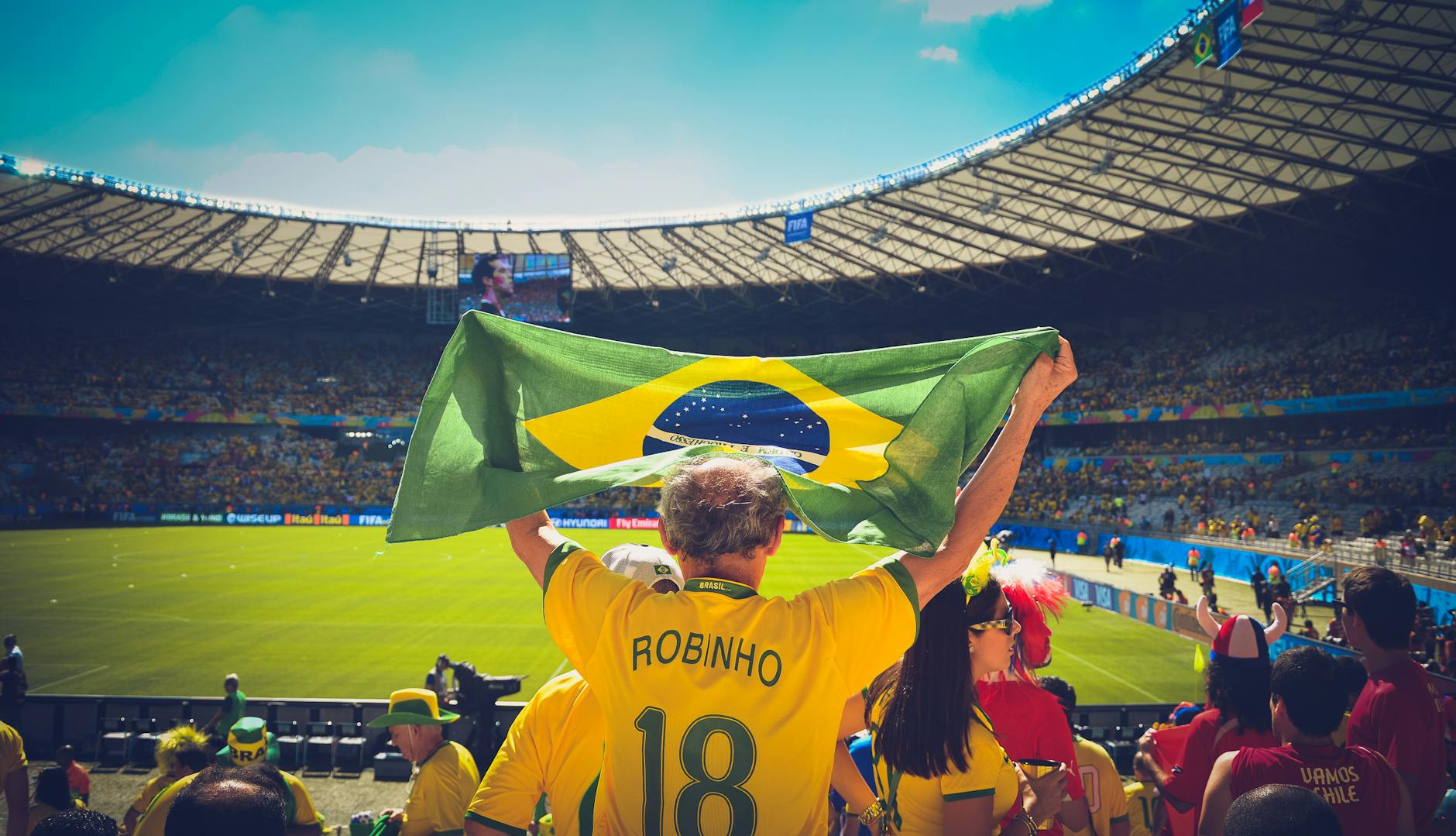
Photo by Caio on Pexels
What changed for players
How does the new format alter the workload, recovery cycle, and tactical calculus for the actual athletes on the pitch? The rest math shifts noticeably. Group-stage matches now span 12 matchdays over 18 days rather than 8 matchdays over 13 days, meaning teams play every 4-5 days instead of every 3-4 days. Early-round knockout matches carry 5-day rest windows, while teams reaching the final from June 11 will compete across 38 days, compared to 32 days in Qatar 2022.
Three tactical consequences follow:
- Squad rotation becomes mandatory, not optional. With 23-player rosters and 6+ matches for finalists, coaches must rotate starters in at least 3 group-stage fixtures. Football Compass tracking data from the 2023 AFC Asian Cup showed that squads rotating 6+ players in group-stage matchday 2 won 57% of their matchday 3 fixtures, compared to 41% for non-rotating squads.
- Travel load increases up to 9,400 km for some teams. A European side opening in Monterrey and closing group play in Vancouver logs more domestic flights than any previous tournament cohort.
- Heat acclimatization windows shorten. With venues spanning from Guadalajara (1,566 m altitude) to Miami (sea level), teams cannot acclimatize to a single climate cluster. FIFA's medical protocols recommend arrival 10 days pre-match for high-altitude venues, meaning squad announcements must occur earlier than in prior cycles.
For readers building fantasy or prediction models, the rest-day variable alone justifies recalibration. Our [Internal Link: player stats and performance metrics] resource outlines the updated fatigue scoring we use at Football Compass.
What this means now
Why does the structural redesign matter for the average fan tracking the tournament from home or attending their first match? The trade-offs are concrete and measurable.
Expanded access, diluted marquee matchups
The 48-team field adds 16 new entrants, including confirmed debutants from UEFA and CAF playoff paths. The trade-off: weaker confederations now occupy group slots previously held by established nations, which statistically reduces the frequency of high-tension group-stage matches. FIFA's own 2023 broadcast report projected 38% more matches featuring a FIFA top-20 ranked side, but distributed across 104 fixtures rather than 64.
Ticket supply and price elasticity
Stadium capacities across the 16 host venues average 65,000, with AT&T Stadium in Arlington (80,000) and MetLife Stadium (82,500) as the largest. Total inventory rises to roughly 6.5 million tickets, a 73% increase over Qatar 2022's 3.7 million. Average ticket prices in the resale market, per ESPN reporting, opened 18% below 2022 levels when adjusted for inflation.
Broadcast and data layer standardization
For the first time, all 104 matches will feature official FIFA match data feeds, including live player tracking, expected threat metrics, and semi-automated offside technology deployed in every venue. Football Compass integrates these feeds into our daily coverage, replacing the partial data sets that characterized earlier tournaments.

Three predictions for the next quarter
What should fans, bettors, and fellow analysts monitor from now through the tournament opener on June 11? Three near-term data points deserve tracking.
- Qualifying final matches for the UEFA playoff round conclude in March 2026. The four remaining slots determine whether Italy, Denmark, Poland, or another European side fills the final qualifying berth. Football Compass will track each confederation's qualifying bracket as UEFA finalizes its 16 allocated slots.
- Squad announcement clustering for the final 8 direct qualifiers is expected between May 18-25, 2026. Tactical form data from Q1 2026 club matches will carry more weight than previous cycles due to the shorter rest windows.
- Venue-specific weather modeling becomes a critical variable. Forecast data for the Houston (June average 33°C), Miami (32°C), and Monterrey (31°C) matches will shape match-level predictions more than venue altitude did in Qatar 2022.
For ongoing coverage including daily match predictions, team-by-team tactical breakdowns, and updated player stat tracking, Football Compass will publish rolling content through the final on July 19. See our [Internal Link: complete 2026 World Cup coverage hub] for the full editorial calendar.

Frequently Asked Questions
Q: How many teams will qualify for the 2026 FIFA World Cup?
A: 48 national teams will compete in the 2026 FIFA World Cup, expanded from the 32-team format used from 1998 to 2022. The slots are distributed across FIFA's six confederations: UEFA receives 16, AFC 8, CAF 9, CONMEBOL 6, CONCACAF 6 (including the three hosts), and OFC 1, with 2 remaining spots reserved for intercontinental playoff winners.
Q: When and where is the 2026 FIFA World Cup final?
A: The 2026 FIFA World Cup final is scheduled for July 19, 2026, at MetLife Stadium in East Rutherford, New Jersey, with a capacity of approximately 82,500. The tournament opens on June 11, 2026, at Estadio Azteca in Mexico City, marking the first time a third host-nation venue has hosted the opening match.
Q: How does the 2026 World Cup group stage format differ from previous tournaments?
A: The 2026 group stage features 12 groups of 4 teams rather than 8 groups of 4, producing 32 knockout-stage qualifiers. The top 2 teams from each group advance directly, plus 8 of the 12 third-place finishers qualify based on a cross-group ranking table, replacing the 16-team knockout bracket used from 1998 to 2022.
Q: Which cities are hosting 2026 World Cup matches?
A: 16 cities across the United States, Mexico, and Canada will host matches: 11 in the US (Atlanta, Boston, Dallas, Houston, Kansas City, Los Angeles, Miami, New York/New Jersey, Philadelphia, San Francisco Bay Area, Seattle), 2 in Mexico (Guadalajara, Monterrey), and 2 in Canada (Toronto, Vancouver). The 2026 World Cup is the first tri-nation hosted edition in tournament history.
Q: How many total matches will be played in the 2026 World Cup?
A: 104 matches will be played across the 2026 FIFA World Cup, a 62.5% increase from the 64 matches used in the 32-team format from 1998 to 2022. Of these, 72 are group-stage matches and 32 are knockout-stage matches, including the final on July 19, 2026.
Q: How does the 2026 format affect player rest and recovery?
A: Players in the 2026 World Cup will have longer recovery windows, with 4-5 days between group-stage matches compared to 3-4 days in prior tournaments. Teams reaching the final will compete across 38 days rather than 32 days, requiring deeper squad rotation from at least 6 players across the 6+ matches.
Q: What should I track most closely as the tournament approaches?
A: Track three priority variables: (1) the UEFA playoff bracket finalizing in March 2026, (2) squad announcements clustering between May 18-25, 2026, and (3) venue-specific weather models for Houston, Miami, and Monterrey matches. Football Compass publishes rolling updates on each variable through the tournament opener.
Thank you for reading.
Football Compass · Latest Insights