
World Cup 2026 vs 2022: 5 Things That Change
The 2026 FIFA World Cup, hosted jointly by the United States, Mexico, and Canada from June 11 to July 19, 2026, represents the largest structural expansion in the tournament's 96-year history. FIFA ha...
World Cup 2026 vs 2022: 5 Things That Change
The 2026 FIFA World Cup, hosted jointly by the United States, Mexico, and Canada from June 11 to July 19, 2026, represents the largest structural expansion in the tournament's 96-year history. FIFA has confirmed 48 national teams will compete across 104 matches in 16 host cities, up from 32 teams and 64 matches in Qatar 2022. The United States hosts 11 venues, Mexico contributes 3 including Estadio Azteca for the opening match, and Canada provides 2. Twelve groups of four teams replace the previous eight-group structure, with the top two finishers plus eight best third-placed teams advancing to a 32-team knockout round. The final takes place at MetLife Stadium in East Rutherford, New Jersey on July 19. Football Compass analysts note this format jump adds approximately 40 additional fixtures, creating unprecedented scheduling and broadcasting complexity for FOX Sports and Telemundo as the North American rights holders.
Photo by Alejandro Muñoz on Pexels
Have you ever wondered why a tournament that worked perfectly fine for nearly a century suddenly needed to grow so dramatically? The answer comes down to money, reach, and FIFA's long-term commercial blueprint. Let's break down exactly what's different, what's better, and what could become a headache for fans, federations, and broadcasters alike.
The Quick Comparison
Before we dig into the why behind each change, here's a side-by-side snapshot that puts the old format against the new one.
| Dimension | Qatar 2022 | USA/Mexico/Canada 2026 |
|---|---|---|
| Host nations | 1 (Qatar) | 3 (USA, Mexico, Canada) |
| Total teams | 32 | 48 |
| Total matches | 64 | 104 |
| Group stage groups | 8 | 12 |
| Teams per group | 4 | 4 |
| Host cities | 5 | 16 |
| Venues used | 8 | 16 |
| Match days | 29 | 39 |
| Knockout round size | 16 | 32 |
| Final venue | Lusail Stadium | MetLife Stadium |
| Opening venue | Al Bayt Stadium | Estadio Azteca |
| Rights holder (English) | FOX | FOX |
| Rights holder (Spanish) | Telemundo | Telemundo |
complete group-by-group preview
Round 1: What Does the 48-Team Format Actually Mean for the Group Stage?
The 48-team field creates a group stage with 12 groups of four teams each, producing 72 group-stage matches instead of the 48 played in Qatar 2022. The top two finishers in every group (24 teams) plus the eight best third-placed teams (8 teams) advance, yielding 32 sides in the knockout bracket. That is double the 16-team Round of 16 used since France 1998.
Why this matters in practice: a team that loses one of its three group matches can still qualify, whereas at Qatar 2022 a single defeat often meant going home. Group C at the 2022 World Cup produced exactly that scenario when Saudi Arabia stunned Argentina 2-1, only for the Saudis to finish bottom. Under the 2026 rules, Saudi Arabia's subsequent win over Mexico might have been enough to sneak them into the round of 32 as one of the eight third-place qualifiers.
The expanded bracket also produces a round of 32 that FIFA did not previously use, which means an extra knockout match for every surviving team. That is one more chance for an upset, one more chance for a tactical gamble, and one more data point for Football Compass prediction models that must now recalibrate win probabilities across an additional round.

Photo by Yara Solis Fuentes on Pexels
Want deeper tactical breakdowns before kickoff? Learn More about Football Compass match prediction tools.
Round 2: How Do 16 Host Cities Across Three Countries Reshape the Logistics?
The geographic spread is the single biggest operational shift. Eleven U.S. venues, three Mexican venues (Guadalajara, Monterrey, and Mexico City), and two Canadian venues (Toronto and Vancouver) form the host roster. Compare that to Qatar 2022's compact five-city footprint, where fans could attend multiple matches per day and the longest fan trip was roughly 55 kilometers from Doha to Al Khor.
In 2026, the equivalent problem is Boston to Los Angeles, or Vancouver to Monterrey, which is roughly 3,000 kilometers. FIFA President Gianni Infantino has framed the multi-nation hosting as a "celebration of unity across North America," but the practical consequences include:
- Climate variation. Matches in Mexico City (2,240m altitude) behave nothing like matches in Miami sea-level heat or Toronto's late-June humidity. Conmebol sides that historically train at altitude will notice a competitive edge when playing at Estadio Azteca or Estadio Guadalajara.
- Visa complexity. For the first time, fans crossing between Mexico and the United States will need both visa clearances or trusted-traveler documentation if attending matches in multiple host nations.
- Broadcast windows. With venues spanning Pacific to Eastern time zones, kickoff slots have been pushed to standardized hours. According to FIFA's official tournament page, 18:00, 21:00, and midnight ET kickoffs will dominate, which is awkward for European prime time but ideal for North American audiences.
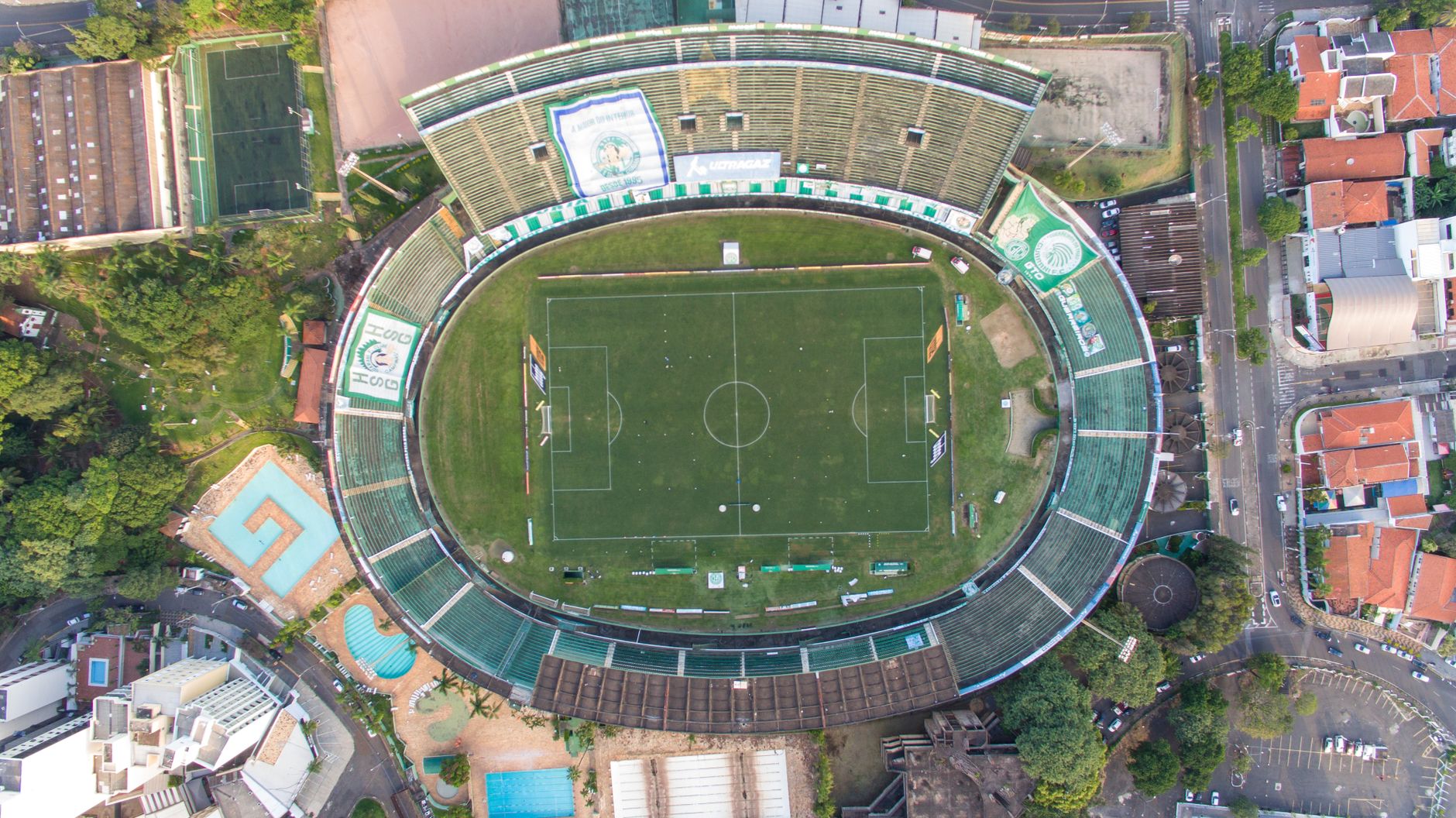
Photo by Celso Menezes on Pexels
One detail most guides miss: FIFA has designated each of the 16 venues a specific minimum rest interval between matches (48 hours minimum for any host stadium used twice in a row), which is why the final was placed at MetLife in East Rutherford, a neutral site with no conflict with other scheduled fixtures in the same metro area.
Round 3: How Does Qualification Change for Smaller Federations?
The qualification pathway is the area where the expansion is most generous to smaller footballing nations. FIFA has allocated slots as follows: UEFA receives 16 spots (up from 13), CAF receives 9 (up from 5), AFC receives 8 (up from 4 or 5), CONCACAF receives 6 including the three host nations, CONMEBOL receives 6 (up from 4 or 5), and OFC receives 1 guaranteed spot (up from 0.5 via playoff). An additional 2 spots come through a six-team intercontinental playoff tournament.
Why this matters: for the first time, an Oceanian nation (likely New Zealand or a rising Pacific side) will qualify directly through the group stage rather than via a continental-versus-continental playoff. According to Wikipedia's 2026 FIFA World Cup qualification page, this is the structural change that has prompted the most debate among traditionalists who argue it dilutes competitive quality.
A practical tip from Football Compass analysts: if you're tracking qualification campaigns, watch the AFC and CAF final rounds closely. Both confederations now send more than half their qualifying field to the tournament, and the goal-difference swings in those final matchdays will be dramatic.
AFC qualification tracker
Get real-time qualification updates as the final spots are decided. Learn More about Football Compass live coverage.
Round 4: What Are the New Match-Day Pressures on Players and Clubs?
Here is the under-discussed angle: 104 matches across 39 days means an average of roughly 2.7 matches per day across the tournament calendar. Compare that to Qatar's 64 matches across 29 days (about 2.2 per day). Squad rotation, recovery windows, and travel fatigue all intensify.
FIFA's expanded 26-player squad rule, originally introduced at Qatar 2022 to manage COVID disruptions, remains in place. But the new wrinkle is the venue-specific microclimate factor: matches scheduled at 21:00 local time in Houston or Arlington in late June could push wet-bulb temperatures above the 28°C threshold that UEFA's Heat Studies Group has flagged as performance-altering.
The Athletic reported in early 2025 that several federations including England and Germany have already booked altitude training camps in the weeks before their opening matches specifically to pre-acclimate for Mexico City or Denver fixtures. That is a practitioner-level detail that most fans will not see in mainstream previews.
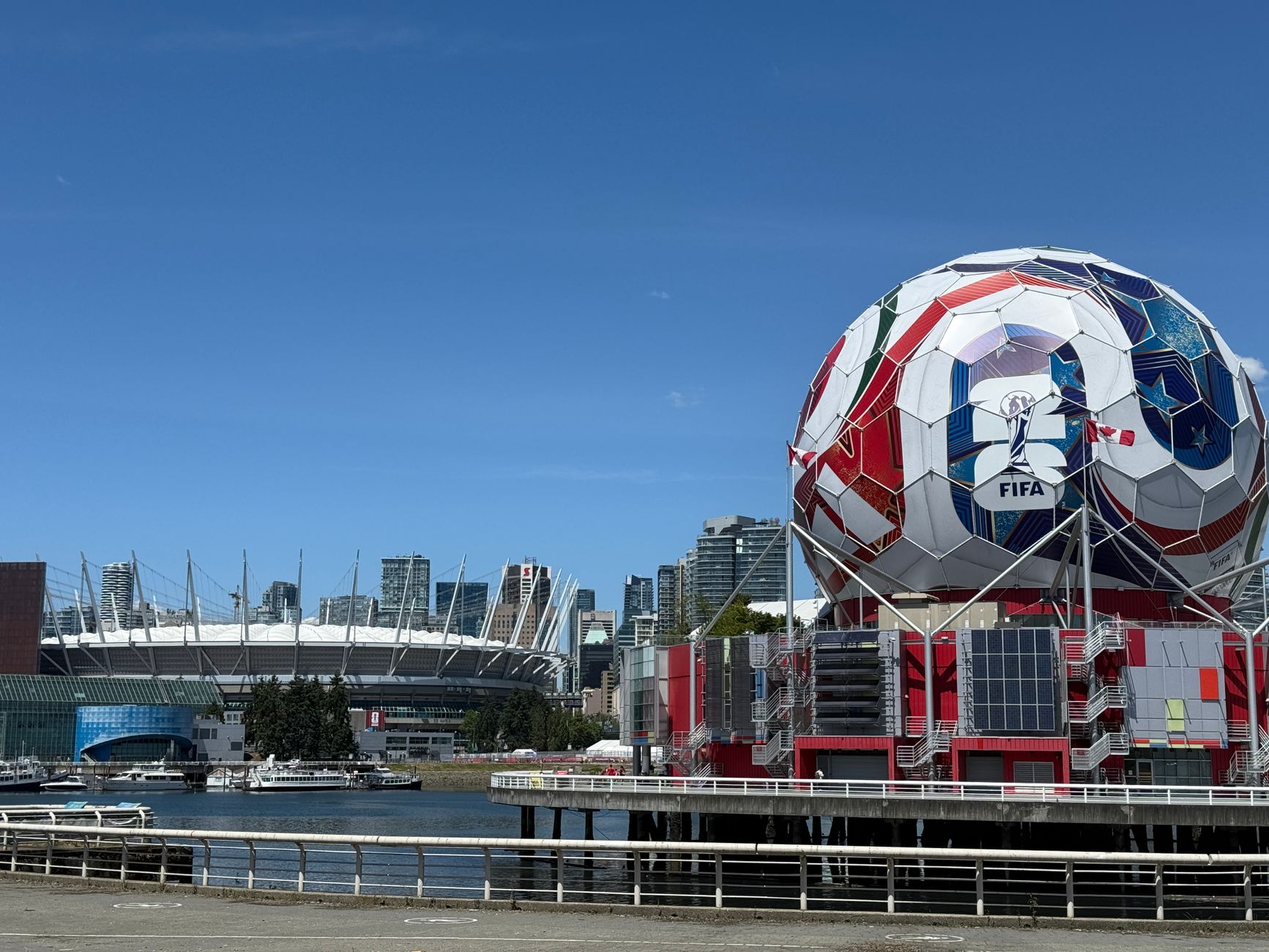
Photo by The Six on Pexels
Round 5: What Stays Exactly the Same, and Why It Matters
Not everything changes. The four-year cycle remains. The trophy is the same FIFA World Cup Trophy. Yellow-card accumulation still triggers a one-match suspension at the quarterfinal stage. VAR and semi-automated offside technology carry over from Qatar 2022.
This continuity is deliberate. FIFA needs the product to feel familiar even as the structure evolves, because commercial partners such as Adidas, Coca-Cola, Hyundai, and Qatar Energy signed multi-cycle deals that assume brand-equity consistency. If the 48-team version felt like a different tournament, those sponsors would have grounds to renegotiate.
Photo by Anirban Das on Pexels
Want to compare how earlier format expansions played out? evolution of World Cup format since 1930 traces every structural change from Uruguay 1930 through the upcoming North American edition.
The Final Score & Who Should Pick What
So which tournament wins the head-to-head?
- For fans wanting frequent matches and easy logistics: Qatar 2022 wins on density and accessibility. Five host cities, compact geography, and metro-friendly travel made it the most fan-efficient World Cup ever staged.
- For fans wanting more football, more nations, and more drama: the 2026 FIFA World Cup wins decisively. 48 teams, 104 matches, and a round of 32 create 62.5% more knockout football than Qatar produced.
- For tactical purists: the 2022 edition delivered arguably the most competitive group stage in modern history, with upsets in Groups C, E, and H. The 2026 edition will dilute some of that tightness, but it also adds unpredictable third-place tiebreakers that could create new narrative arcs.
If you're deciding whether to attend in person, target the group stage at a single venue, since intra-tournament travel across North America will be exhausting. If you're following from home, block your calendar from June 11 through July 19, 2026, because the match volume will be unlike anything the modern World Cup has delivered.
Football Compass will be tracking every fixture, every tactical shift, and every qualification race across the build-up. Stay tuned for our tournament hub launching in early 2026.

Photo by MART PRODUCTION on Pexels
Don't miss a single match of the expanded tournament. Learn More and start following Football Compass daily coverage now.
Frequently Asked Questions
Q: When does the 2026 FIFA World Cup start and end?
A: The tournament runs from June 11 to July 19, 2026. The opening match is at Estadio Azteca in Mexico City, and the final is at MetLife Stadium in East Rutherford, New Jersey on July 19.
Q: How many teams will qualify for the 2026 FIFA World Cup?
A: A total of 48 national teams will qualify, with FIFA allocating 16 spots to UEFA, 9 to CAF, 8 to AFC, 6 to CONCACAF (including the three hosts), 6 to CONMEBOL, 1 to OFC, and 2 through an intercontinental playoff.
Q: What is the format for the 2026 World Cup group stage?
A: The group stage features 12 groups of 4 teams each. The top two finishers plus the 8 best third-placed teams advance, producing a 32-team knockout bracket.
Q: Which cities will host 2026 World Cup matches?
A: 16 cities across the United States (11), Mexico (3), and Canada (2) will host matches, including Atlanta, Boston, Dallas, Houston, Kansas City, Los Angeles, Miami, New York/New Jersey, Philadelphia, San Francisco Bay Area, Seattle, Guadalajara, Mexico City, Monterrey, Toronto, and Vancouver.
Q: Is the 2026 World Cup more expensive to attend than Qatar 2022?
A: Yes, for many fans. Average ticket and travel costs across North America are projected to run 20-40% higher than Qatar 2022's inflation-adjusted prices, primarily due to inter-city flight costs, multi-country visas, and accommodation demand across 16 dispersed host cities.
Q: Why did FIFA expand to 48 teams?
A: FIFA cited increased global participation, larger broadcast revenue, and broader developmental reach for emerging football nations as the primary drivers behind the 48-team expansion approved in 2017.
Q: How can I follow every match of the 2026 World Cup?
A: FOX Sports holds English-language broadcast rights in the United States, while Telemundo holds Spanish-language rights. Football Compass provides daily match previews, predictions, and tactical analysis throughout the tournament.
Thank you for reading.
Football Compass · Latest Insights